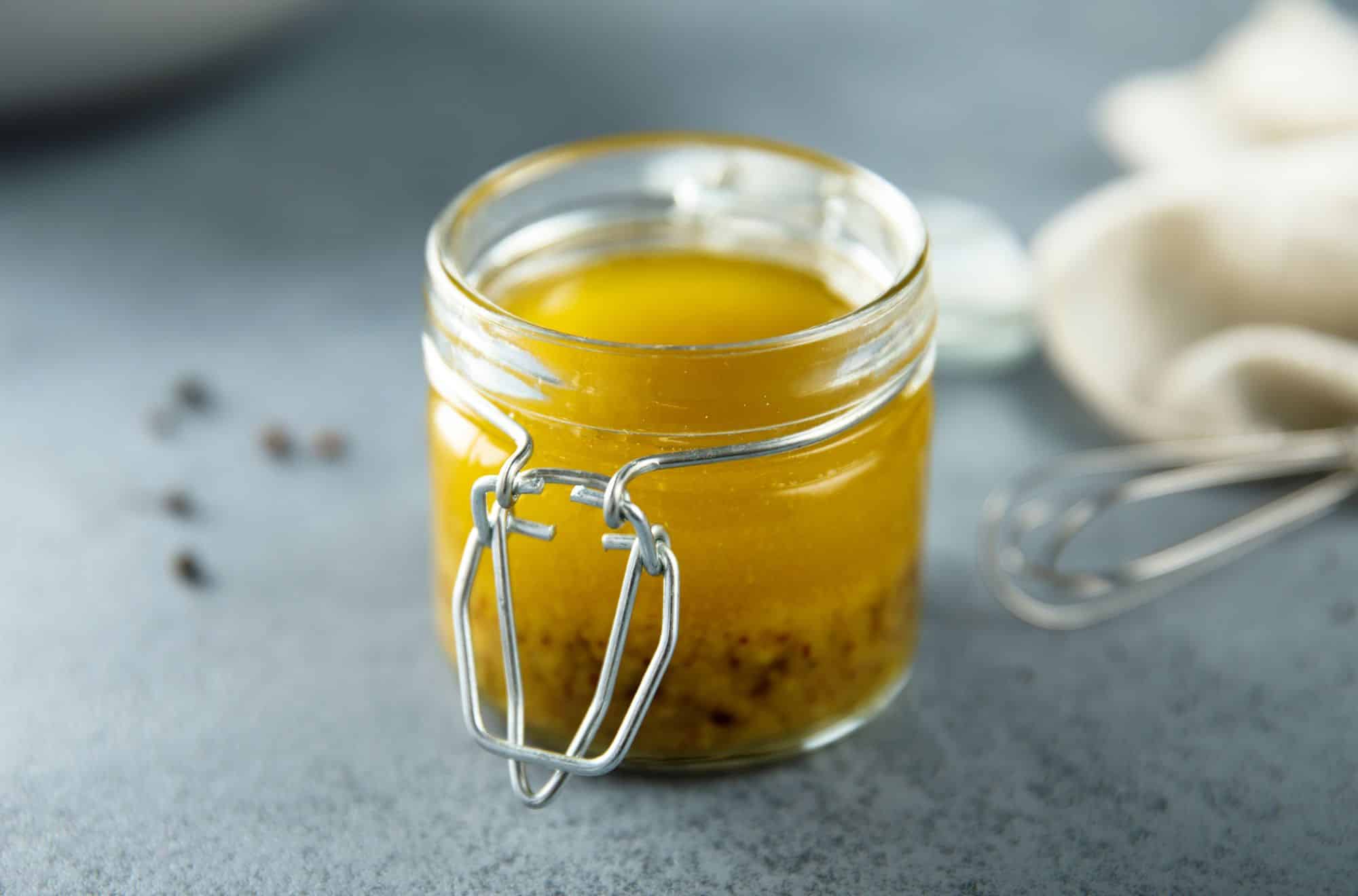
This is a simple vinaigrette made from six pantry ingredients โ olive oil, apple cider vinegar, Dijon mustard, garlic, Italian seasoning, and sea salt โ that comes together in under five minutes. It skips the stabilizers, sweeteners, and seed oils found in most bottled dressings, and the flavor is sharp, garlicky, and genuinely satisfying. If you eat salad regularly, keeping a jar of this in the fridge means youโre always one shake away from a dressed bowl.
The short version of why this works
The Dijon mustard does two things at once: it adds flavor and acts as an emulsifier, helping the oil and vinegar stay blended longer than they would on their own. That matters because a dressing that separates immediately coats unevenly โ you get puddles of oil on one leaf and a sharp vinegar hit on the next. The pressed garlic (including the rough bits that donโt make it through the press cleanly) distributes flavor throughout the jar rather than sitting in one spot, so every shake redistributes it evenly. These two elements โ emulsification and even flavor distribution โ are what separate this from a basic oil-and-vinegar pour.
Mistakes to avoid
- Using the wrong ratio of oil to acid. This recipe runs roughly 3:1 oil to vinegar, which is the standard vinaigrette ratio. Going heavier on the vinegar to โbrightenโ it makes the dressing harsh and unbalanced โ if you want more punch, add a small squeeze of lemon instead of increasing the vinegar volume.
- Dressing the whole batch at once. Dress it at the table โ a pre-dressed salad goes limp fast, especially with delicate greens. Store the dressing separately and toss just before eating.
- Skipping the shake before serving. Even with mustard as an emulsifier, this dressing will separate after sitting in the fridge. Always shake the jar well right before you pour โ a separated dressing means the first salad gets mostly oil and the last one gets mostly vinegar.
- Not tasting for salt before you serve. The amount of salt that tastes right on the dressing alone may need adjusting once it hits your greens. Dress a few leaves, taste them, and add a pinch more salt to the jar if needed before serving the whole bowl.
- Storing it too long. Fresh pressed garlic in oil can develop off flavors after about a week in the fridge. Make smaller batches more often rather than one large batch you stretch across two weeks.
Paleo Salad Dressing (6 Ingredients, 5 Minutes)
Equipment
- Wide-mouth mason jar with lid (16 oz / 475ml)
- Garlic press
- Tablespoon measuring spoon
- Cup measuring cup
Ingredients
- 1 cup olive oil 240ml
- โ cup apple cider vinegar 80ml, Bragg Raw Apple Cider Vinegar
- 2 tablespoons Dijon mustard 30g
- 3 cloves garlic pressed, about 9g
- 1 teaspoon Italian seasoning 2g
- 1ยฝ teaspoons sea salt 9g
Instructions
- Add the olive oil, apple cider vinegar, Dijon mustard, pressed garlic (including any rough bits from the press), Italian seasoning, and sea salt to a wide-mouth mason jar.1 cup olive oil, โ cup apple cider vinegar, 2 tablespoons Dijon mustard, 3 cloves garlic, 1 teaspoon Italian seasoning, 1ยฝ teaspoons sea salt
- Secure the lid tightly and shake vigorously for 20-30 seconds until the dressing is fully emulsified and appears creamy and uniform in colour.
- Serve immediately over your favourite salad, or seal the jar and store in the fridge for up to 2 weeks. Shake well before each use โ the dressing may thicken or partially solidify when cold, which is completely normal for olive oil-based dressings.
Notes
Nutrition
FAQ
Can I use a different oil instead of olive oil?
Yes โ avocado oil works well and has a milder flavor if you find olive oil too assertive. Avoid strongly flavored oils like unrefined coconut oil, which will solidify in the fridge and clash with the vinegar.
Will this dressing solidify in the fridge?
It will thicken and may partially solidify, especially if you use extra virgin olive oil, which is normal. Take it out of the fridge about 10 minutes before you need it and give it a good shake โ it loosens up quickly at room temperature.
How much dressing should I use per serving?
A good starting point is about 2 tablespoons per large individual salad. Add it gradually and toss as you go โ itโs easier to add more than to fix an overdressed bowl.
What salads does this dressing work best on?
It holds up well on heartier greens like romaine, kale, or arugula, and works especially well on salads with substantial toppings โ roasted vegetables, chickpeas, grilled chicken, or hard-boiled eggs โ that can stand up to a bold, garlicky vinaigrette. Delicate butter lettuce can handle it too, just use a lighter hand.