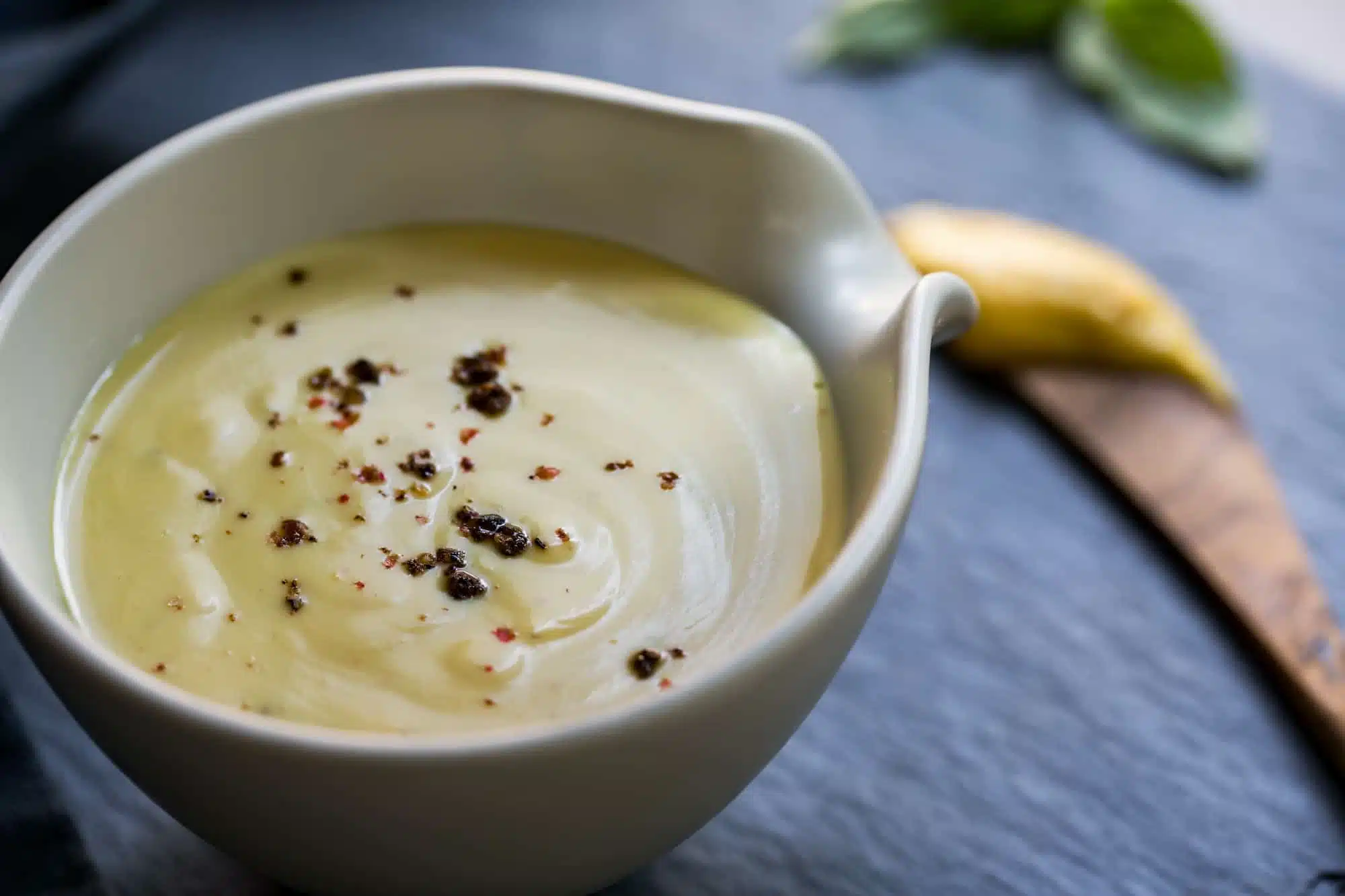

This is a five-ingredient vinaigrette you can mix in a small bowl in about five minutes. It uses Dijon mustard, vinegar, olive oil, Worcestershire sauce, and a pinch of kosher salt โ things most kitchens already have. The mustard does real work here: it emulsifies the dressing so it clings to leaves instead of pooling at the bottom of the bowl.
The short version of why this works
Dijon mustard contains compounds that help oil and vinegar bind together โ thatโs why this dressing turns thick and cohesive instead of separating the moment you stop whisking. The ratio matters too: four tablespoons of oil to two tablespoons of vinegar sits at 2:1, which is on the sharper, more acidic end of the classic range. Thatโs intentional. A slightly punchier dressing holds up better on sturdy greens like romaine or spinach, and it wonโt disappear into a grain salad. If you add the oil too fast, the emulsion breaks and you get a greasy, separated mess โ so go slowly and keep whisking the whole time.
If something goes sideways
- Dressing separated and looks oily: Add a tiny second pinch of Dijon to the bowl and re-whisk vigorously while drizzling the broken dressing back in slowly. The fresh mustard gives the emulsion a new anchor.
- Tastes flat or one-dimensional: Worcestershire sauce is salty and savory on its own โ if yours ran out, a few drops of soy sauce or even a small splash of fish sauce will cover that role. Taste and adjust before serving.
- Too sharp or acidic: Stir in a small drizzle of honey or a pinch of sugar. Half a teaspoon is usually enough to round out the bite without making it sweet.
- Olive oil flavor is too strong: A neutral oil like avocado or a light vegetable oil can replace part or all of the olive oil. The dressing will be milder but will still emulsify the same way.
- No Dijon on hand: Whole-grain mustard works and gives a slightly coarser texture. Yellow mustard will emulsify but the flavor is noticeably milder and more vinegary โ use a little less vinegar to compensate.
Leftovers and meal prep
Store leftover dressing in a sealed jar in the refrigerator for up to one week. The olive oil will solidify when cold โ thatโs normal. Let the jar sit at room temperature for ten minutes, then shake it hard before using. Because this recipe makes a single serving (roughly two tablespoons of dressing), itโs easy to scale up: double or triple the amounts and keep the extra in the fridge ready to go. Dress it at the table โ a pre-dressed salad goes limp fast. If youโre packing lunch, keep the dressing in a separate small container and add it just before eating.
Easy Dijon Mustard Vinaigrette
Equipment
- Small mixing bowl
- Whisk
- Tablespoon measure
- Small glass jar with lid (for storage)
Ingredients
- 1 tablespoon Dijon mustard 15g
- 1 pinch kosher salt
- ยฝ teaspoon Worcestershire sauce or to taste
- 2 tablespoons red wine vinegar or any vinegar you prefer
- 4 tablespoons extra-virgin olive oil 60ml
Instructions
- In a small bowl, combine the Dijon mustard, kosher salt, Worcestershire sauce, and red wine vinegar. Whisk until the mustard is fully dissolved and the mixture is smooth.1 tablespoon Dijon mustard, 1 pinch kosher salt, 1/2 teaspoon Worcestershire sauce, 2 tablespoons red wine vinegar
- While whisking constantly, add the olive oil in a very slow, thin stream. Continue whisking until the dressing is thick, creamy, and fully emulsified โ about 60 seconds. Taste and adjust salt or vinegar as needed.4 tablespoons extra-virgin olive oil
Notes
Nutrition
FAQ
What kind of vinegar should I use?
Any vinegar you have works. Red wine vinegar gives a classic French-style bite, white wine vinegar is a bit milder, and apple cider vinegar adds a faint sweetness. Balsamic will make the dressing darker and sweeter โ use a little less if you go that route.
Can I make this without Worcestershire sauce?
Yes. A few drops of soy sauce is the easiest swap โ it adds the same salty, savory depth. If youโre keeping it fully plant-based, check the label first, since traditional Worcestershire contains anchovies.
Why is the calorie count so high for one serving?
The 511 calories come almost entirely from four tablespoons of olive oil, which is about 480 calories on its own. This recipe makes one full serving of dressing, but in practice most people use less than the full amount on a single salad.
Can I use a different mustard?
Whole-grain mustard is the closest substitute and works well. Yellow mustard will emulsify the dressing but the flavor is sharper and more acidic, so you may want to reduce the vinegar slightly.
What salads does this dressing work best on?
It works on most green salads, especially ones with sturdy leaves like romaine, spinach, or arugula. Itโs also good on grain salads โ try it on a chickpea or lentil salad where a vinaigrette with some body holds up better than a thin dressing.