
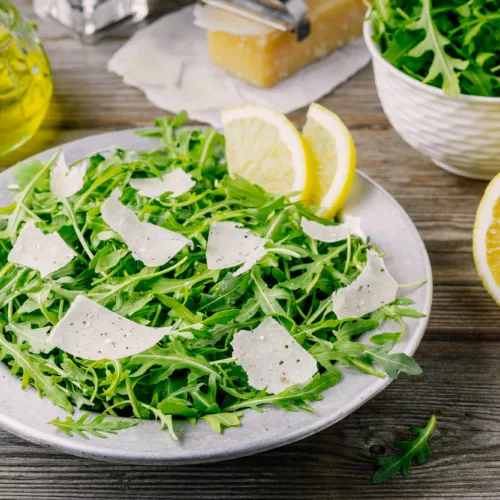

This is a three-ingredient dressing โ fresh lemon juice, good extra-virgin olive oil, and kosher salt โ whisked together in about ten minutes. It works on almost any salad you put in front of it, and making it from scratch takes less time than finding a bottle in the back of the fridge.
The short version of why this works
The technique here is a slow pour. Adding the olive oil to the lemon juice in a thin, steady stream while whisking constantly forces the two liquids to emulsify โ meaning they combine into a cohesive dressing instead of separating into oily puddles. That emulsification is what makes the dressing cling to leaves rather than pool at the bottom of the bowl. The ratio matters too: this recipe runs slightly more lemon-forward than a classic vinaigrette, which gives it a clean, bright flavor that doesnโt coat your palate. If your lemon is particularly sharp, a small splash more oil pulls it back into balance.
Shopping notes
- Olive oil: This is the one ingredient worth spending money on. A finishing-quality extra-virgin oil โ something youโd taste on bread โ makes a real difference here because the oil is uncooked and front and center. Flavored oils (garlic, rosemary, Italian herb blends) work well and add complexity without extra steps.
- Lemon juice: Fresh only. Bottled lemon juice has a cooked, slightly flat flavor that shows up clearly in a dressing this simple.
- Kosher salt: Fine sea salt is a fine substitute. Avoid iodized table salt โ it can leave a faint metallic edge in acidic dressings.
Leftovers and meal prep
The dressing keeps in a sealed jar in the refrigerator for up to one week. Cold olive oil solidifies, so pull it out about 30 minutes before you need it and give it a good shake or re-whisk to bring it back together. As for the salad itself: dress it at the table โ a pre-dressed salad goes limp fast. If youโre prepping components ahead, keep the dressing separate and store cut vegetables uncovered on a paper-towel-lined tray in the fridge to stay dry and crisp. Wet vegetables dilute the dressing and slow down the emulsion.
What can go wrong
- The dressing breaks and looks oily: You poured the oil too fast. Fix it by starting over with a teaspoon of fresh lemon juice in a clean bowl and slowly whisking the broken dressing into it, drop by drop at first.
- It tastes flat even after seasoning: Your lemon may be old or thin-skinned with low juice yield. Roll it firmly on the counter before cutting โ this breaks down the membranes and releases more juice. A small pinch of zest stirred in also sharpens the flavor without adding more acid.
- The dressing slides off the leaves: Wet greens repel dressing. Spin or pat your lettuce completely dry before tossing โ even a little surface water breaks the cling.
- Itโs too sharp and adding oil isnโt helping: A single small pinch of sugar or a few drops of honey will blunt excessive acidity faster than more oil will, without throwing off the texture.
- It tastes thin and watery: A seed snuck through and you didnโt notice โ citrus seeds release a bitter compound. Always strain or check the bowl before whisking.
Lemon Olive Oil Dressing (3 Ingredients, 5 Minutes)
Equipment
- Small mixing bowl
- Balloon whisk
- Citrus juicer or reamer
- Mason jar with lid (for storage)
Ingredients
- โ cup fresh lemon juice 80ml, about 2-3 medium lemons
- ยผ cup extra-virgin olive oil 60ml, premium quality
- 1 pinch kosher salt
Instructions
- Squeeze โ cup (80ml) fresh lemon juice into a small mixing bowl, removing any seeds.โ cup fresh lemon juice
- Add a pinch of kosher salt to the lemon juice and stir briefly to dissolve.1 pinch kosher salt
- While whisking constantly with your other hand, pour the olive oil into the lemon juice in a very thin, steady stream โ this should take about 30-60 seconds. The slow pour forces the oil and lemon juice to emulsify into a cohesive, slightly thickened dressing.ยผ cup extra-virgin olive oil
- Continue whisking for another 15-20 seconds until the dressing looks slightly creamy and opaque rather than separated. It should coat the back of a spoon lightly.
- Taste and adjust โ if itโs too sharp, whisk in a little more olive oil, a teaspoon at a time. If it tastes flat, add another small pinch of salt. Pour over your salad at the table and toss just before serving.ยผ cup extra-virgin olive oil, 1 pinch kosher salt
Notes
Nutrition
FAQ
Can I use bottled lemon juice instead of fresh?
No โ bottled lemon juice doesnโt work well here. In a dressing with only three ingredients, the processed flavor of bottled juice is noticeable and makes the dressing taste dull.
Do I need a blender or food processor?
No, a small bowl and a whisk are all you need. The slow-pour whisking method produces a well-emulsified dressing without any equipment.
Can I add garlic or herbs to this?
Yes, and it holds up well to additions. A small minced or grated garlic clove, dried oregano, or fresh chopped parsley all mix in cleanly โ add them after the dressing is emulsified so they donโt interfere with the whisk.
Why does my dressing separate after a few minutes?
Lemon-and-oil dressings without a binder like mustard or honey will always separate eventually โ thatโs normal. A quick re-whisk or shake before pouring brings it back together in seconds.
Is this dressing strong enough for heartier salads like grain bowls or roasted vegetables?
Yes, it works well on both. Grain bowls and roasted vegetables can handle the acidity, and the light oil base doesnโt weigh them down the way a creamy dressing might.
How much dressing does one batch make, and is it enough for a large salad?
One batch (โ cup lemon juice plus ยผ cup oil) makes just over half a cup, which comfortably dresses a salad for four people. For a larger crowd or a big grain salad, simply double the quantities โ the ratio scales evenly.

