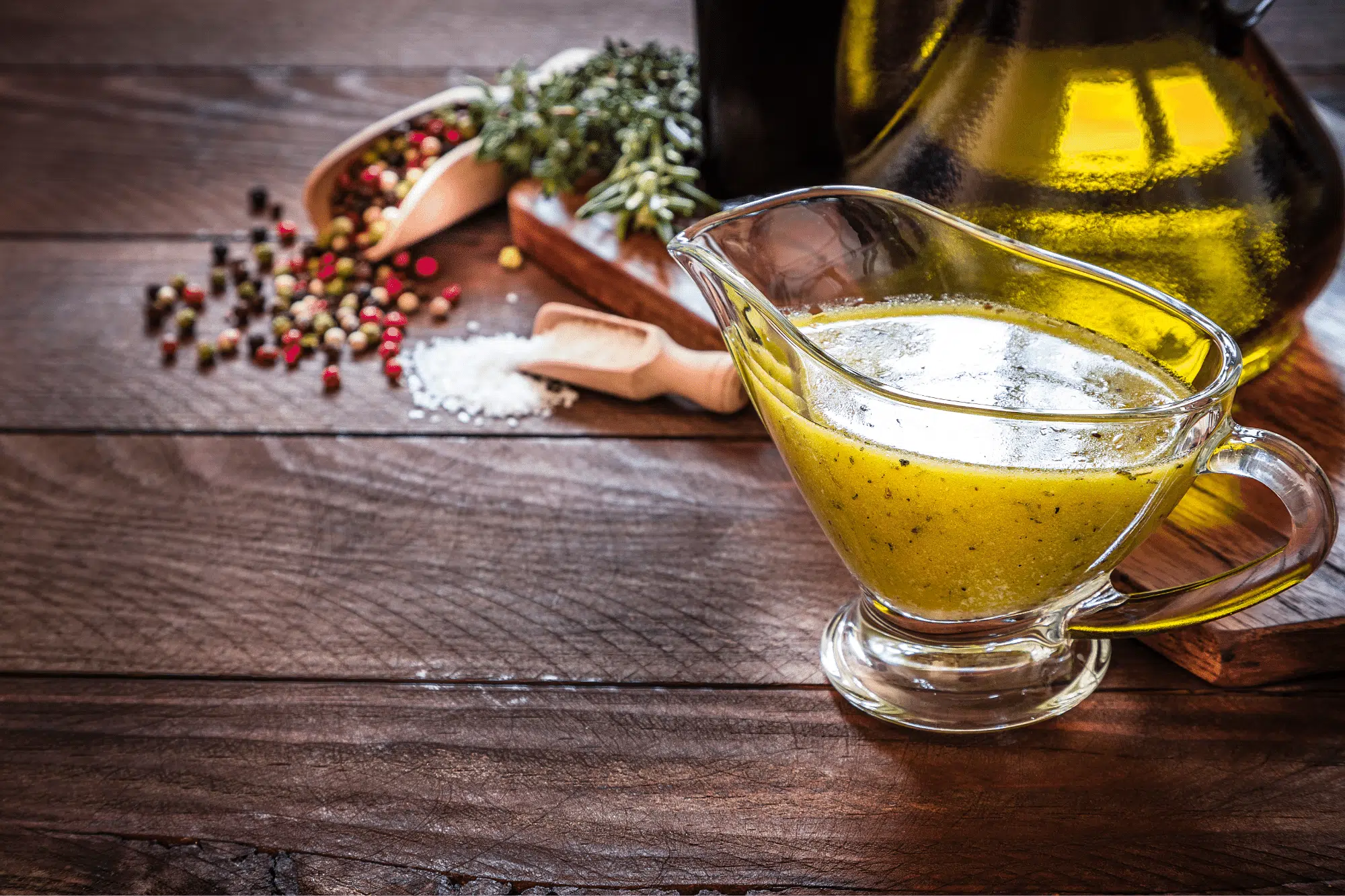

This is a blender vinaigrette built around fresh basil, rice vinegar, and olive oil, with a small amount of unsweetened apple juice that rounds out the acidity without making the dressing taste like fruit. It comes together in five minutes and works on any green salad sturdy enough to hold a well-seasoned dressing. If you want something that actually satisfies rather than just coats leaves, this is a good place to start.
What makes this version work
Two things matter here. First, the order of blending: everything except the olive oil goes in first and gets fully combined before the oil is added. This gives the basil, shallot, garlic, and mustard a chance to break down into a cohesive base, so the oil has something to emulsify into rather than just pooling on top. Second, the ground mustard is doing real structural work โ it acts as an emulsifier, helping the oil and vinegar stay combined long enough to actually cling to salad leaves instead of sliding off. Skip it or swap it for prepared mustard and the dressing will still taste fine, but it will separate faster and coat less evenly.
Ingredient notes
- Apple juice: Use 100% unsweetened apple juice. Sweetened juice or apple juice cocktail will push the dressing into candy territory. The recipe uses only 2 teaspoons, so the flavor is subtle โ you are adding balance, not apple flavor.
- Rice vinegar: Unseasoned rice vinegar is the right call here. Seasoned rice vinegar already contains sugar and salt, which will throw off the balance of the dressing.
- Fresh basil: Dried basil will not work as a substitute โ the dressing depends on fresh basil for both flavor and the slight green color. If your basil is wilted, soak the leaves in cold water for a few minutes before measuring.
- Shallot: One medium shallot is mild enough raw. If you only have a white or yellow onion, use about a tablespoon, finely chopped, and taste before adding more โ raw onion is sharper than shallot.
Troubleshooting
- Dressing tastes flat or one-dimensional: Taste it before chilling and adjust. A pinch more salt or an extra few drops of lemon juice usually fixes this. The flavors sharpen slightly after 20 minutes in the fridge, so give it time before over-correcting.
- Dressing is too thick to pour: The basil and shallot can make it paste-like depending on your blender. Add water one teaspoon at a time and blend briefly until it reaches a pourable consistency.
- Dressing separates immediately when poured: The emulsion broke, usually because the oil was added too fast. Reblend everything for another 20 to 30 seconds โ it should come back together. Next time, pour the oil in a slow, thin stream.
- Garlic flavor is too sharp or raw-tasting: Make sure the garlic is fully minced before it goes in, and let the dressed salad sit for two or three minutes before serving โ the acidity in the vinegar mellows raw garlic quickly.
- Dressing turns brown after storage: Basil oxidizes fast once cut. This does not affect the flavor, but if the color matters to you, press plastic wrap directly against the surface of the dressing before sealing the container.
Keeping it fresh
Store the dressing in a sealed jar or airtight container in the refrigerator for up to five days. The olive oil will solidify when cold โ set the jar out at room temperature for ten minutes and shake well before using. Dress it at the table โ a pre-dressed salad goes limp fast, especially with tender greens like butter lettuce or spinach. If you are building a salad meant to hold up as a full meal with grains, roasted vegetables, or beans, those components can be tossed with dressing up to an hour ahead since they benefit from marinating. Keep any crisp elements โ croutons, seeds, raw vegetables โ separate until you are ready to eat.
Sweet Basil Vinaigrette
Equipment
- Blender or Food Processor
- Airtight glass jar or storage container
- Measuring cups and spoons
Ingredients
- ยพ cup fresh basil packed and roughly chopped, about 20g
- 1 medium shallot peeled and roughly chopped, about 1oz / 30g
- 1 teaspoon garlic minced, about 1 medium clove
- 2 tablespoons fresh lemon juice 30ml, about 1 small lemon
- 2 teaspoons unsweetened apple juice 10ml
- ยผ cup rice vinegar 60ml, unseasoned
- 1 teaspoon ground mustard
- ยฝ teaspoon fine sea salt or to taste
- ยพ cup extra-virgin olive oil 180ml
Instructions
- Add the basil, shallot, garlic, lemon juice, apple juice, rice vinegar, ground mustard, and salt to a blender or food processor. Pulse 5โ6 times, then blend on low for 20โ30 seconds until the mixture is smooth and the shallot is fully broken down.3/4 cup fresh basil, 1 medium shallot, 1 teaspoon garlic, 2 tablespoons fresh lemon juice, 2 teaspoons unsweetened apple juice, 1/4 cup rice vinegar, 1 teaspoon ground mustard, 1/2 teaspoon fine sea salt
- With the blender running on low speed, slowly drizzle in the olive oil in a thin, steady stream. Once all the oil is added, continue blending for 20โ30 seconds until the dressing is fully emulsified and creamy.3/4 cup extra-virgin olive oil
- Pour the vinaigrette into a glass jar or airtight container and refrigerate for at least 20 minutes โ this allows the flavours to meld and the emulsion to set.
- Shake or stir well before serving. Drizzle over salad at the table rather than pre-dressing to keep greens crisp.
Notes
Nutrition
Your questions, answered
Can I make this without a blender?
You can, but the texture will be chunkier and the emulsion less stable. Mince the basil, shallot, and garlic as finely as possible, whisk everything together except the oil, then drizzle in the oil while whisking constantly. It will taste the same but separate more quickly, so shake or stir it well right before dressing your salad.
What salads does this dressing actually work on?
It works best on salads with some substance โ mixed greens with roasted vegetables, a grain bowl, or a salad with white beans or chickpeas. The basil and lemon flavors are assertive enough to stand up to hearty ingredients, and the slight sweetness balances bitter greens like arugula or radicchio particularly well.
The recipe makes four servings โ can I scale it down?
Yes, but be aware that most blenders struggle to process very small quantities evenly. If you are halving the recipe, a small food processor or an immersion blender in a tall narrow cup works better than a standard countertop blender.