
Vietnamese Salad Dressing

by Phoebe Green
Vietnamese Salad Dressing (Nước Chấm) — 5-Minute Recipe

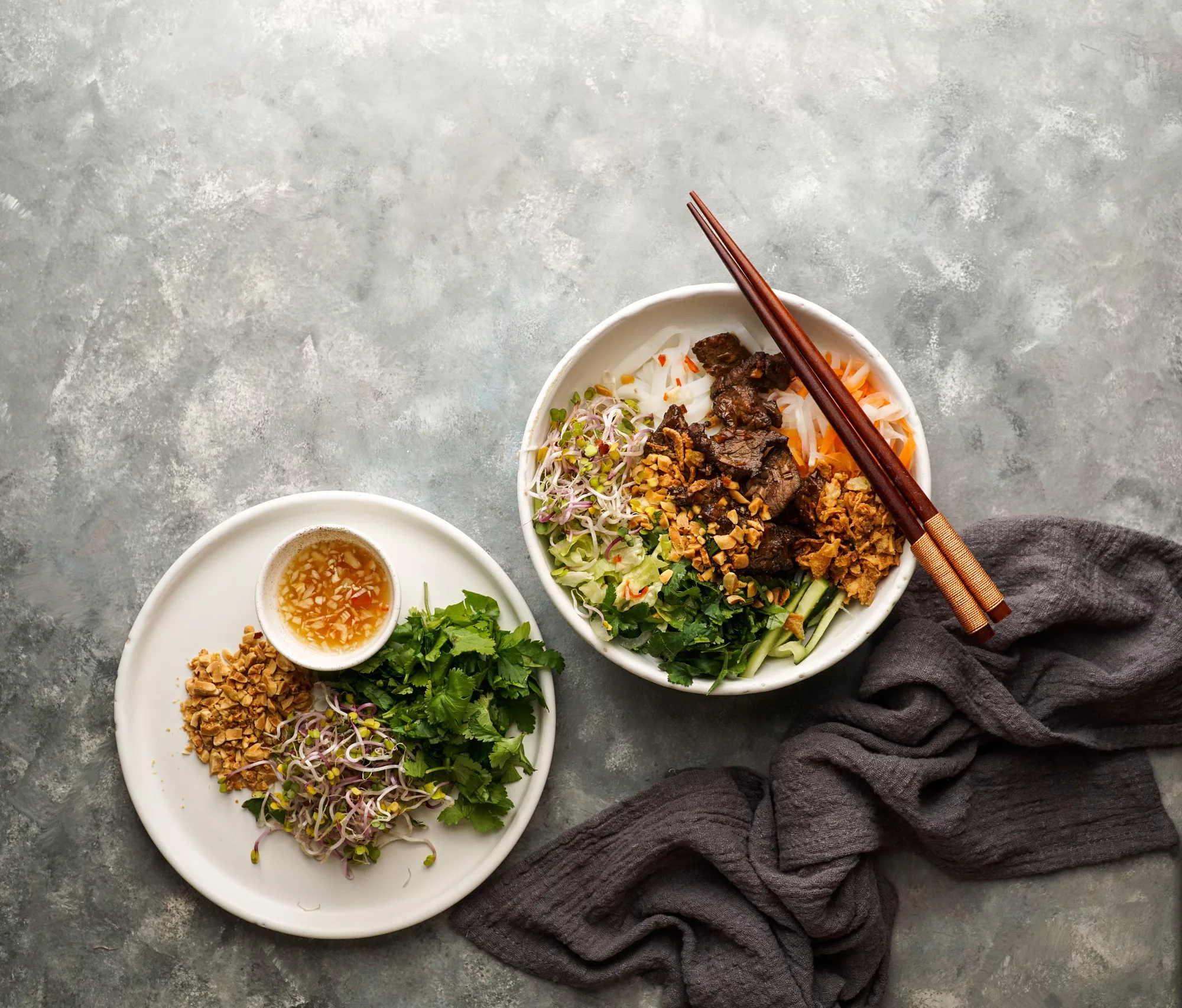
This is the dipping sauce and dressing that shows up alongside Vietnamese rice paper rolls, grilled meats, and shredded salads. It takes five minutes, uses pantry staples, and the balance of salty, sweet, sour, and heat is genuinely hard to get from a bottle. Make it once and you’ll stop looking for a substitute.

What makes this version work

Two things matter here. First, crushing the garlic and chilli in a mortar and pestle rather than mincing them releases the oils differently — you get a more rounded, less sharp heat that blends into the dressing instead of sitting on top of it. Second, the water must be boiled (then cooled slightly is fine). Hot water dissolves the sugar completely, which means no gritty texture and no sweetness that pools at the bottom of the bowl. Stir everything together while the water is still warm, taste it, then adjust — lime juice is your last-second tool for pulling the whole thing into focus. Dress it at the table — a pre-dressed salad goes limp fast.

If something goes sideways

  • The dressing tastes flat: It needs more lime juice. Add it a small squeeze at a time. Flat usually means the acid is low, not that something is missing.
  • It’s too salty: Fish sauce varies a lot by brand. Add a teaspoon more water and a pinch more sugar to bring it back into balance — don’t try to dilute it with plain water alone or you’ll lose the sweetness.
  • The sugar didn’t dissolve: Your water wasn’t hot enough. Warm the dressing briefly in a small saucepan over low heat, stirring until clear, then let it cool before serving.
  • The garlic is too sharp or raw-tasting: Crushing breaks it down, but if your cloves are very large or pungent, let the finished dressing sit for five minutes before tasting — the fish sauce mellows raw garlic quickly.
  • It’s too spicy to serve to everyone: Leave the chilli whole or in large pieces so it infuses gently, then remove it before serving. Guests who want more heat can add fresh chilli to their own bowl.
Vietnamese Salad Dressing (Nước Chấm) — 5-Minute Recipe

Vietnamese Salad Dressing (Nước Chấm) — 5-Minute Recipe

Phoebe Green
When I have Vietnamese food, I laways crave for the Vietnamese salad dressing that goes with almost every Vietnamese food that I love eating. Here's how you can prepare it at home.
5 from 1 vote
Prep Time 5 minutes
Total Time 5 minutes
Course Side Dish
Cuisine Vietnamese
Servings 4 servings
Calories 28 kcal

Equipment

  • Mortar and pestle
  • Small mixing bowl
  • Citrus juicer or reamer
  • Teaspoon measuring set
  • Small sealed jar or container (for storage)

Ingredients


  • 4 cloves garlic peeled
  • 1 red bird’s eye chilli or 1 small red chilli for milder heat
  • 1 tablespoon white vinegar 15ml
  • 5 teaspoons white sugar 20g, or caster sugar
  • 2 tablespoons boiled water 30ml, cooled slightly
  • 2 tablespoons fish sauce 30ml
  • fresh lime juice juice of ½–1 lime, to taste

Instructions
 

  • Peel the garlic cloves and roughly chop the chilli, discarding the seeds if you prefer less heat. Add both to a mortar and pestle and pound to a rough paste — you want the garlic crushed and the chilli broken down, but it doesn’t need to be perfectly smooth.
    4 cloves garlic, 1 red bird’s eye chilli
  • If your mortar is large enough, add the boiled water and sugar directly to the paste and stir until the sugar is completely dissolved. Then add the fish sauce and white vinegar and stir to combine. If your mortar is too small, transfer the garlic-chilli paste to a small bowl first, then add the liquids and sugar.
    1 tablespoon white vinegar, 5 teaspoons white sugar, 2 tablespoons boiled water, 2 tablespoons fish sauce
  • Taste the dressing and adjust the balance — add more lime juice for brightness, more sugar for sweetness, or more fish sauce for depth. To serve, pour into a small dipping bowl and top with extra sliced fresh chillies if you prefer more heat.
    fresh lime juice

Notes

Storage: Keeps in a sealed jar in the fridge for up to 5 days. The garlic and chilli will continue to infuse — flavour peaks around day two.
Make-Ahead: Prepare a double or triple batch at the start of the week. Stir and add a fresh squeeze of lime before serving.
Substitutions: Swap fish sauce with soy sauce or tamari in the same quantity for a vegetarian version. The depth won’t be identical but the balance still works. White sugar dissolves fastest, but coconut sugar or palm sugar give a slightly deeper, more caramel-like sweetness that’s traditional in many Vietnamese households.
Pro Tip: Always taste and adjust the lime juice last — it’s the easiest lever to pull the sweet-salty-sour balance into focus.
Serving Suggestion: Serve alongside rice paper rolls, shredded cabbage and herb salads, grilled pork or chicken, or drizzled over Vietnamese vermicelli noodle bowls.

Nutrition

Serving: 1servingCalories: 28kcalCarbohydrates: 6gProtein: 1gPolyunsaturated Fat: 0.01gSodium: 708mgPotassium: 39mgSugar: 5gVitamin A: 4IUVitamin C: 1mgCalcium: 10mgIron: 0.1mg
Feedback is key!Rate this Recipe !

Common questions

Can I make this dressing ahead of time?

Yes — it keeps well in a sealed jar in the fridge for up to five days. The garlic and chilli will continue to infuse, so the flavour gets slightly stronger by day two, which most people prefer.

What can I use instead of fish sauce if I need a vegetarian version?

Soy sauce or tamari works as a direct swap in the same quantity. The result won’t be identical — fish sauce has a depth soy doesn’t fully replicate — but the dressing will still be balanced and usable.

What salads does this dressing actually work on?

It’s best on shredded cabbage, carrot, cucumber, and fresh herb salads — anything crunchy that can stand up to a thin, watery dressing. It doesn’t cling to soft lettuces well, so skip it on a simple green salad.

Do I have to use a mortar and pestle, or can I just mince the garlic?

Mincing works fine if that’s what you have. The texture will be slightly different — small pieces of garlic rather than a paste — but the flavour difference is minor for a beginner cook.

How do I know if the dressing is balanced before I serve it?

Dip a piece of cucumber or a lettuce leaf into it rather than tasting it straight from a spoon — the dressing is concentrated and will taste too salty on its own. If it tastes good on the vegetable, it’s ready.

Try these next

5 from 1 vote (1 rating without comment)

Leave a Comment

Cooked this? Rate this recipe!


This site uses Akismet to reduce spam. Learn how your comment data is processed.

saladrecipesinfo
My bowl is filled to the brim with all the colours of the earth. Hundreds of yummy salad recipes to try.