
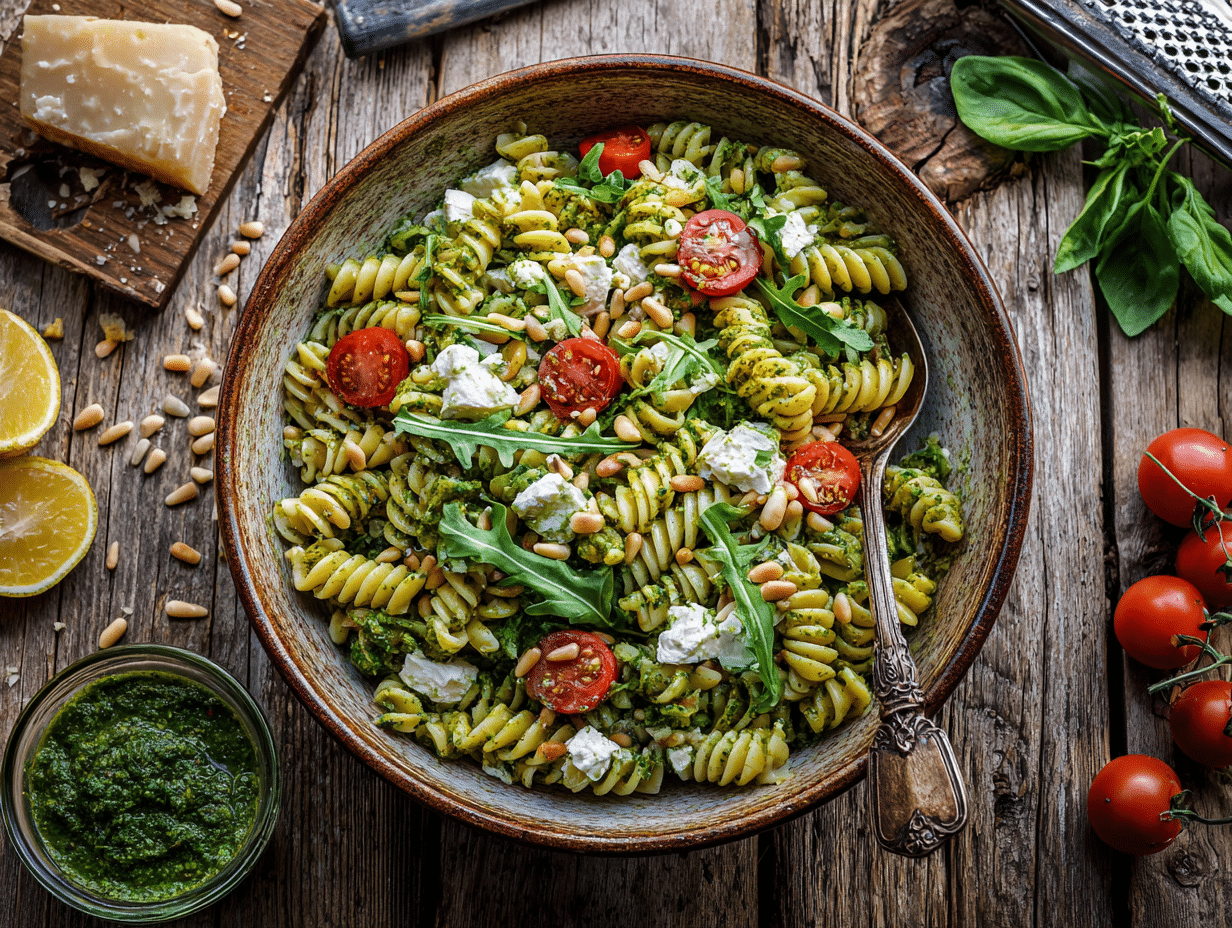
The Goat Cheese & Pesto Rotini Salad is a vibrant celebration of Mediterranean flavors infused with a fresh, modern twist. At its heart is the time-honored inspiration of Ligurian pesto—a fragrant blend of fresh basil, garlic, pine nuts, and cheese, traditionally pounded by mortar and pestle in the Genovese region of Italy. This classic sauce has long graced bowls of pasta, particularly trofie and trenette, bringing together garden-fresh herbs and rich olive oil in a distinctly Italian expression of simplicity and seasonality.
In this recipe, I drew from that Ligurian essence but took it in a direction more fitting for today’s weekday lunches, backyard potlucks, and breezy outdoor dinners. Rather than being a quick hot meal, this cold pasta salad is built for sharing, storing, and savoring from fridge to picnic blanket. The rotini noodles—short, spiraled, and sturdy—are a natural substitute for trofie, adept at clutching onto every glossy smear of pesto in their grooves. Their ribbed design ensures each bite is packed with texture and flavor.
But where traditional pesto alla Genovese relies solely on basil and sometimes can darken in color or become soggy in storage, here we round out the herbal mix with baby spinach and a squeeze of lemon for both brightness and stability. The spinach helps maintain the pesto’s emerald hue, while the lemon adds a lively citrus top note that cuts through the richness. Instead of pecorino or Parmigiano-Reggiano alone, we incorporate finely grated Parmesan into the pesto and then toss the entire salad with crumbled goat cheese—a creamy chèvre that playfully melts into the warm pasta like a tangy dressing, coating every piece with luxurious creaminess.
Toasted pine nuts carry that subtle nuttiness pesto lovers expect, but we let them shine in two ways—some get blitzed into the pesto, while the rest are reserved for a final flourish, offering a satisfying crunch that contrasts beautifully with the soft cheese and al dente pasta. Cherry tomatoes, ripened to their candy-like sweetness, lend acidity and juicy bursts, while diced cucumber adds refreshing, crisp contrast. A few handfuls of arugula introduce peppery zip, rounding out the dish with both flavor and color.
This recipe isn’t just about honoring Italian flavors—it’s also about reimagining a pasta salad that feels both elevated and practical. Unlike mayonnaise-heavy versions, it treads lightly but with complexity, ideal for those looking to lighten up summer meals without compromising taste. Best of all, its make-ahead friendliness means you can prep it the night before and simply add the finishing garnishes—crumbled goat cheese, a final drizzle of olive oil, torn basil leaves—right before serving. It’s casual yet composed, making it equally at home on a backyard buffet or as a sophisticated desk lunch.
In merging the Mediterranean’s herbaceous warmth with the structure and convenience of American-style pasta salads, Goat Cheese & Pesto Rotini Salad is a dish that celebrates tradition, seasonality, and ease—all in one satisfying, sun-kissed bowl.
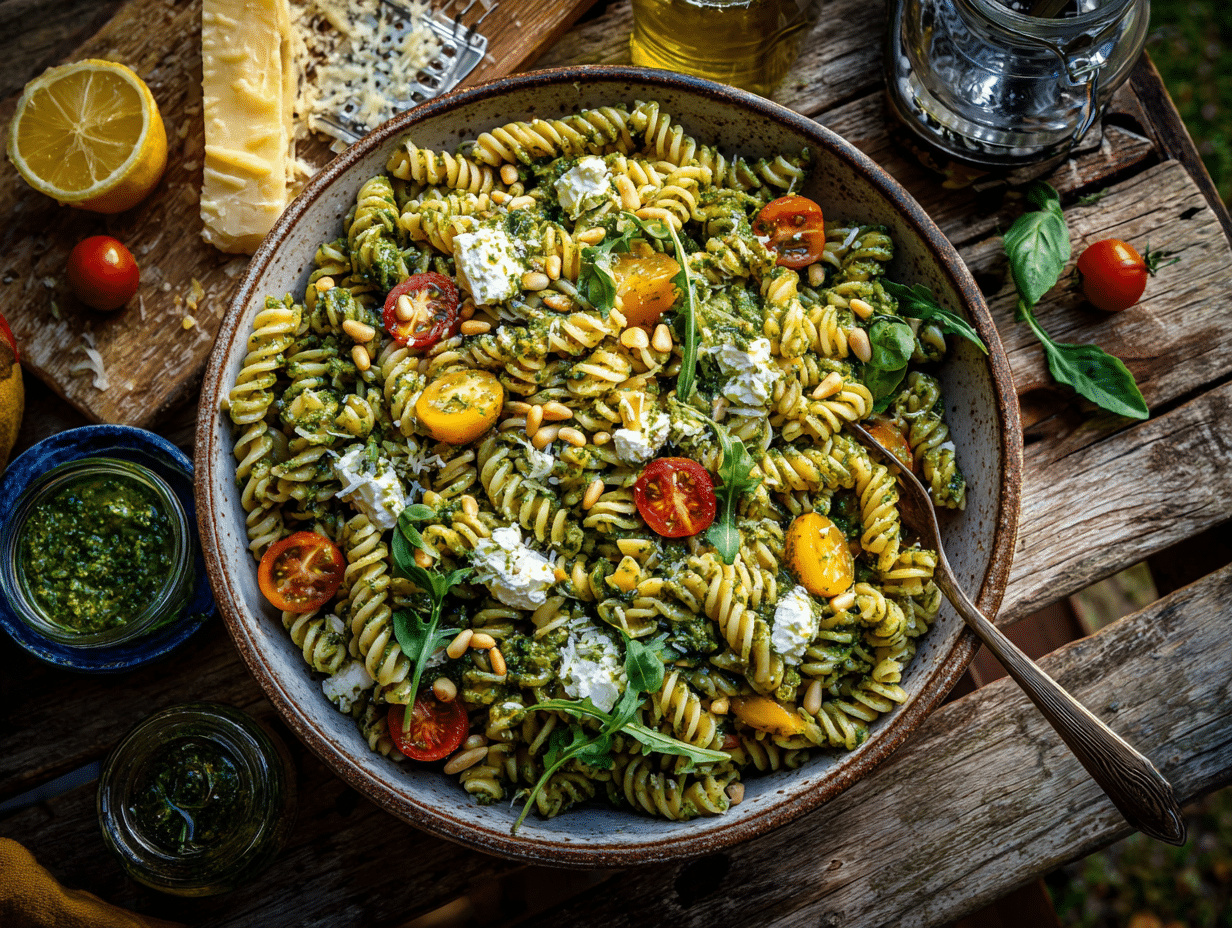
Goat Cheese & Pesto Rotini Salad

Equipment
- Large pot
- Sheet pan
- Parchment paper (optional)
- Colander
- Food processor
- Large mixing bowl
- Measuring cups and spoons
- Rubber Spatula
- Chef’s Knife
- Cutting board
- Microplane or fine zester
- Tongs or pasta spoon
Ingredients
For Toasting & Pasta:
- ⅓ cup pine nuts divided
- 1 tbsp kosher salt for pasta water; plus more to taste
- 12 oz rotini pasta dry
- ¼ cup reserved pasta water from cooking the rotini
For the Aromatics & Veg:
- 1 small shallot thinly sliced
- 1 tbsp white wine vinegar
- 1 pint cherry tomatoes halved
For the Basil–Spinach Pesto:
- 2 cups fresh basil leaves packed
- 1 cup baby spinach packed
- 1 clove garlic
- 1 tsp lemon zest finely grated
- 2 tbsp fresh lemon juice
- ⅓ cup Parmesan cheese finely grated
- ¼ tsp crushed red pepper flakes optional
- ½ tsp fine sea salt
- ½ tsp freshly ground black pepper
- ⅓ cup extra-virgin olive oil for the pesto
For the Assembly & Finish:
- 1 medium English cucumber diced (about 1 1/2 cups)
- 2 cups arugula loosely packed
- 6 oz goat cheese chilled log, crumbled
- 1 tbsp extra-virgin olive oil for finishing
- ¼ cup fresh basil leaves torn, for garnish
- 1 pinch freshly ground black pepper (additional) or to taste; for serving
Instructions
- Toast the Pine Nuts: Heat the oven to 350°F / 175°C. Spread the pine nuts on a sheet pan and toast for 6–8 minutes, shaking once, until golden and fragrant. Cool completely; reserve 2 tablespoons for garnish and use the rest in the pesto.
- Cook the Rotini: Bring a large pot of water to a rolling boil. Salt generously with 1 tablespoon kosher salt, add rotini, and cook until al dente, 9–10 minutes, stirring occasionally. Reserve 1/4 cup pasta water, then drain. Spread the pasta on a sheet pan or toss with a teaspoon of olive oil to prevent sticking; let cool 5 minutes.
- Macerate the Aromatics: In a small bowl, combine sliced shallot with white wine vinegar and a pinch of salt; let stand 5 minutes to lightly pickle and soften. Toss the cherry tomatoes with a pinch of salt in a separate bowl to draw out their juices.
- Make the Pesto: In a food processor, combine basil, spinach, garlic, lemon zest, 2/3 of the toasted pine nuts, Parmesan, red pepper flakes (if using), sea salt, and black pepper. Pulse until finely chopped. With the motor running, stream in 1/3 cup olive oil and process until glossy and emulsified, loosening with 1–2 tablespoons reserved pasta water for a creamy, spoonable sauce. Adjust lemon and salt to taste.
- Combine the Salad: In a large mixing bowl, add cooled rotini and 2/3 to 3/4 cup pesto (enough to coat). Fold in tomatoes (with their juices), drained shallots, cucumber, and arugula. Toss until every curve of pasta is lightly glazed; add splashes of reserved pasta water as needed for silkiness. Season to taste with salt and pepper.
- Finish and Serve: Gently crumble goat cheese over the salad and sprinkle with the reserved toasted pine nuts. Drizzle with 1 tablespoon olive oil, add fresh basil, and finish with a few grinds of black pepper. Serve at room temperature or chill 10–15 minutes to meld flavors.
Notes
Chef’s Tips:
- Keep it Green: The spinach and a touch of lemon stabilize basil’s color; avoid overheating the pesto and fold it into cooled pasta to keep it vibrant.
- Crumbly Goat Cheese: For clean crumbles that don’t smear, chill the log well or freeze it for 10 minutes before crumbling with a fork.
- Texture Control: Use reserved pasta water to loosen the pesto little by little until it clings in a thin, glossy film—this prevents a greasy feel.
- Make-Ahead: Pesto can be made 2 days ahead; press plastic wrap directly on its surface and refrigerate. Assemble the salad up to 1 day in advance; add goat cheese and basil just before serving.
- Swaps: Try walnuts or almonds in place of pine nuts; sub short pasta like fusilli or cavatappi. If you prefer a subtler tang, use half goat cheese and half mozzarella pearls.
- Storage: Refrigerate up to 3 days. Toss with a splash of olive oil or water to refresh before serving.