
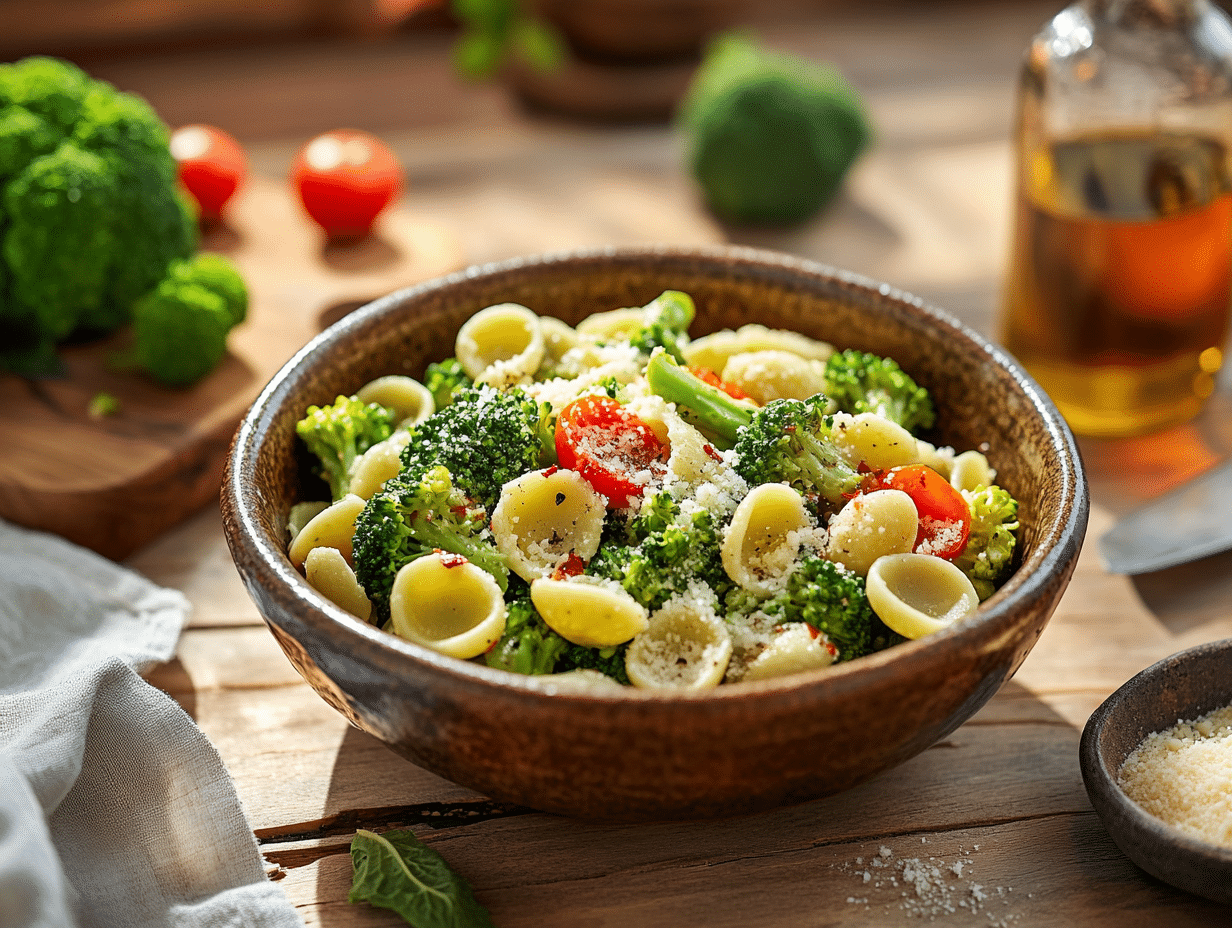
This is a pasta salad built on orecchiette, broccoli, cherry tomatoes, garlic, chili flakes, olive oil, and Pecorino Romano — cooked in one pot in about 35 minutes. It works warm, at room temperature, or cold from the fridge, which makes it genuinely useful for packed lunches and last-minute sides. The ingredient list is short and the technique is straightforward, so the quality of each component actually matters.
What makes this version work
Two things carry this dish. First, cooking the broccoli directly in the pasta water during the final 3 minutes means the florets soften just enough without turning grey, and the starchy water clings to both the pasta and the vegetables when you drain them — giving the olive oil something to grip. Second, the pasta needs to be genuinely al dente before you drain it. Orecchiette is thicker than most shapes, so pulling it a minute early and letting residual heat finish the job keeps the texture firm enough to hold up against the tomatoes and oil rather than turning soft and heavy in the bowl.
Mistakes to avoid
- Skipping the salt in the pasta water. The pasta and broccoli absorb seasoning while they cook. If the water is bland, no amount of salt added afterward fully corrects it — you end up over-salting the surface while the interior stays flat.
- Adding the garlic raw without thinking about it. One raw minced clove works fine if the salad is being served immediately and you like a sharp bite. If it’s sitting for more than 20 minutes, the garlic turns harsh. Letting it sit in the olive oil for a few minutes before tossing softens the edge considerably.
- Using cold cherry tomatoes straight from the fridge. Cold tomatoes taste like almost nothing. Pull them out 20–30 minutes before you start cooking so they’re at room temperature when they go into the bowl.
- Grating the Pecorino too coarsely. Coarse shreds don’t distribute evenly and tend to clump. A fine grater or a Microplane gives you a light, even coating that actually sticks to the orecchiette.
- Rinsing too aggressively. A brief cold rinse stops the cooking, which is the goal. A long rinse washes away the surface starch that helps the olive oil adhere — dress it at the table, and keep the rinse short.
Shopping notes
- Orecchiette: Dried orecchiette from any standard supermarket brand works well here. Look for a brand made with durum wheat semolina — it holds its shape better than softer flour versions. If you can’t find it, small shells (conchiglie) or cavatappi trap the dressing in a similar way.
- Pecorino Romano: It’s sharper and saltier than Parmesan, so taste before adding extra salt. If you only have Parmesan on hand, use it — the flavor is milder but the dish still works. For a vegan version, nutritional yeast stirred into the olive oil before tossing gives a similar savory depth.
- Cherry tomatoes: Any variety works. If you only have a large tomato, seed it and chop it into rough chunks — just drain off the excess liquid first so it doesn’t water down the dressing.
Leftovers and meal prep
Store leftovers in an airtight container in the fridge for up to 3 days. The pasta absorbs the olive oil as it sits, so the salad will look drier after a day — add a small drizzle of olive oil and a pinch of salt before serving and it comes back together quickly. The cherry tomatoes soften over time, which is fine for a packed lunch but less ideal if you want the texture contrast. If you’re prepping ahead for a gathering, cook and drain the pasta and broccoli, toss with just enough olive oil to coat, and refrigerate separately from the tomatoes and cheese. Combine everything and add the remaining oil, garlic, and Pecorino within an hour of serving.
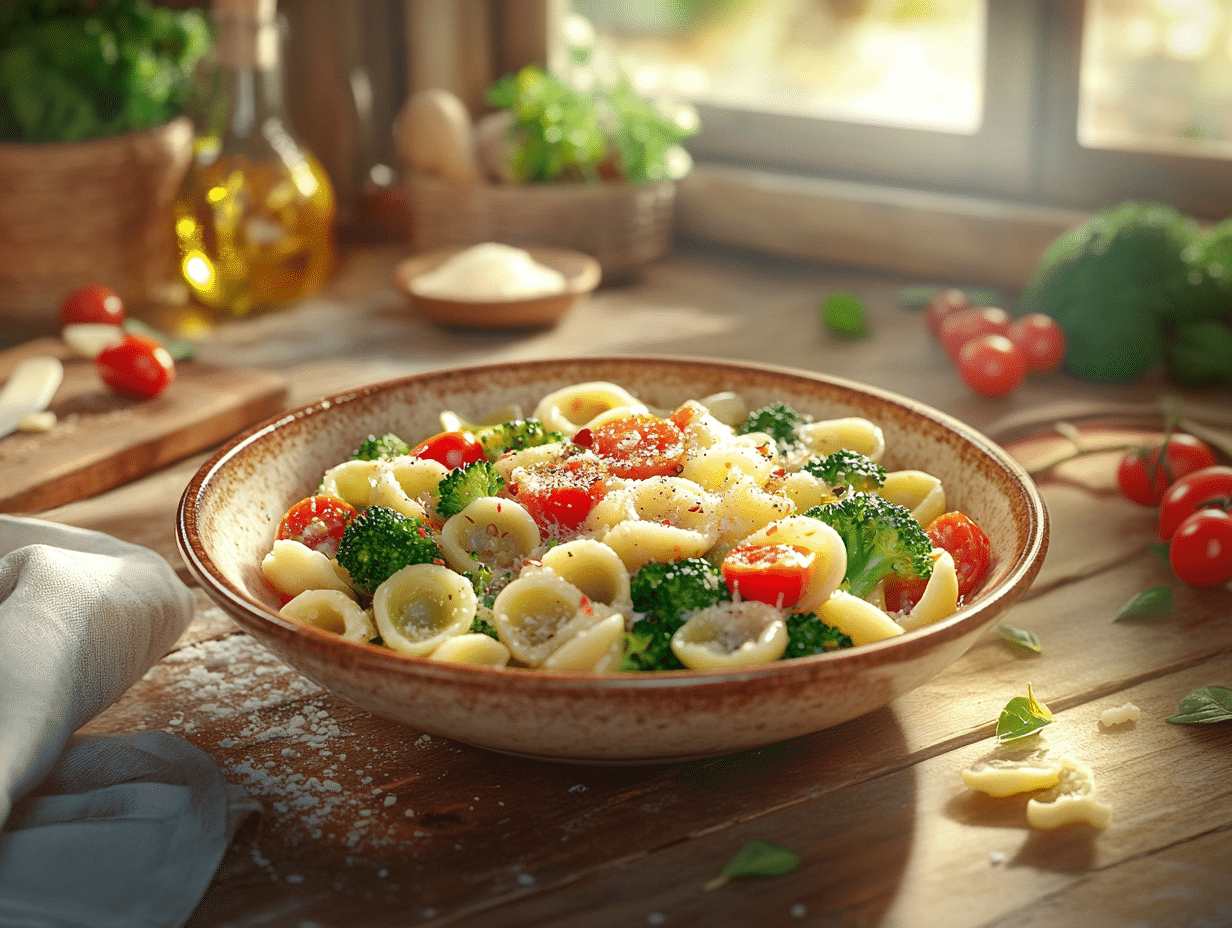
Apulian Orecchiette and Broccoli Salad

Equipment
- 1 Large pot
- 1 Colander
- 1 Large mixing bowl
- 1 Chef's Knife
- 1 Cutting board
- 1 Wooden spoon
- 1 Grater
Ingredients
- 9 ounces Orecchiette pasta Preferably handmade or from a good brand
- 10.5 ounces Broccoli florets Fresh and organic
- 3 tablespoons Extra virgin olive oil Cold-pressed
- 1 cup Cherry tomatoes Halved, preferably heirloom
- 2 ounces Pecorino Romano Finely grated
- 1 clove Garlic Minced
- 1 pinch Chili flakes Optional, for a hint of spice
- 1 pinch Salt To taste
- 1 pinch Black pepper Freshly ground, to taste
Instructions
- Bring a large pot of salted water to a boil. Add the orecchiette and cook for 8-10 minutes until al dente, stirring occasionally. Listen for the bubbling simmer of the water and look for slightly firm pasta for the perfect doneness.
- In the final 3 minutes of pasta cooking, add the broccoli florets to the pot. Experience the vibrant green colors bloom and the aroma of fresh broccoli.
- When cooked, drain the pasta and broccoli using a colander and rinse briefly under cold water to stop the cooking process.
- In a large mixing bowl, combine the orecchiette, broccoli, cherry tomatoes, garlic, chili flakes, salt, and pepper. Drizzle with olive oil and toss until well mixed. The vegetables should glisten slightly from the oil.
- Add grated Pecorino Romano and gently toss again to combine.
Notes
Nutrition
FAQ
Can I use frozen broccoli instead of fresh?
Yes, but add it to the boiling water for only 1 minute rather than 3, since frozen florets are already partially cooked and will turn mushy quickly. Drain and rinse under cold water immediately to stop the cooking.
Can I make this without Pecorino Romano if I don’t have it?
Parmesan is the easiest swap — use the same amount. For a dairy-free version, 2–3 tablespoons of nutritional yeast stirred into the olive oil before tossing gives a salty, savory note that does a reasonable job in its place.
Is this recipe good served cold, or does it need to be warm?
It works at any temperature. Served warm it’s closer to a pasta dish; at room temperature or cold it functions well as a salad or packed lunch. The main thing to know is that the olive oil firms up slightly when refrigerated, so let it sit out for 10 minutes and add a fresh drizzle before eating cold.
What can I use instead of orecchiette if my store doesn’t carry it?
Small shells (conchiglie) or cavatappi are the best substitutes because they trap the oil and small bits of broccoli in a similar way. Farfalle or penne also work, though they won’t hold the dressing quite as well.
How do I keep the broccoli green and not grey?
The cold rinse after draining is the key step — it stops the cooking process immediately and locks in the color. Don’t skip it, and don’t let the broccoli sit in hot water after the pasta is done.