
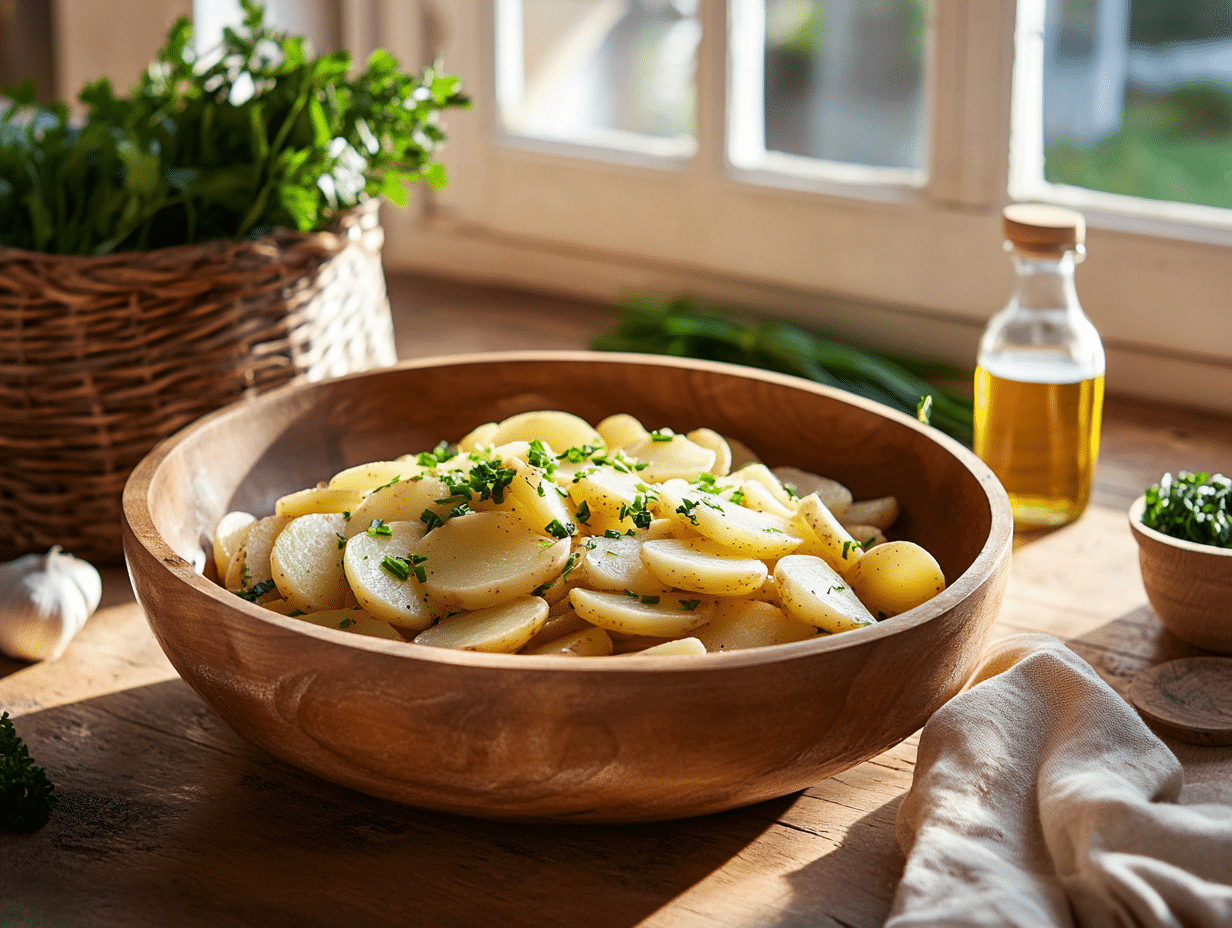
Austrian potato salad skips the mayonnaise entirely. The dressing is built on white wine vinegar, Dijon mustard, and warm broth — tangy, light, and good at room temperature, which makes it genuinely useful at a cookout or alongside a weeknight pork chop. It takes about 50 minutes start to finish and costs almost nothing to make.
Substitutions that actually work
- Waxy potatoes: Yukon Golds are the easiest swap — they hold their shape well after boiling. Russets will turn mushy, so avoid them here.
- White wine vinegar: Apple cider vinegar works fine and is usually cheaper. Red wine vinegar is slightly bolder but still good. Plain distilled white vinegar is too sharp — cut the amount by about a third if that’s all you have.
- Dijon mustard: Whole-grain mustard gives you a bit of texture and works well. Yellow mustard is milder; use the same amount but expect a softer flavor.
- Vegetable broth: Chicken broth works if you’re not keeping this vegetarian. In a pinch, dissolve half a bouillon cube in a cup of hot water — just watch the salt in the rest of the recipe.
- Neutral oil: Sunflower, canola, or light olive oil all work. Extra-virgin olive oil has a stronger flavor that can compete with the vinegar, but it’s not wrong if that’s what’s in the cupboard.
- Fresh chives or parsley: Either herb works. Dried herbs don’t — the finish needs something fresh and green.
Before you start
Two things actually determine how this salad tastes. First, slice the potatoes before boiling, not after — the cut surfaces absorb the warm broth dressing far more effectively than whole cooked potatoes that you slice later. Aim for pieces that are uniform in thickness so they finish cooking at the same time. Second, the broth goes on while the potatoes are still hot. This isn’t optional. Hot potato starch is porous; it pulls the seasoned liquid in as it cools. If you wait until the potatoes are cold, the dressing just sits on the surface and the salad tastes flat.
What can go wrong
- Dressing breaks and looks greasy: Whisk the oil in slowly and make sure the mustard is fully incorporated first — it’s the emulsifier holding everything together. If it splits, whisk in a teaspoon of cold water to bring it back.
- Salad tastes bland even after seasoning: The broth and vinegar need salt to come forward. Taste the dressing on its own before it goes on the potatoes, and season it assertively — potatoes absorb a lot.
- Potatoes fall apart: They were cooked too long or sliced too thin. Pull them when a fork slides in with a little resistance, not when they’re completely soft. Thicker slices — about ¼ inch — hold up better.
- Too sharp or too acidic: Different vinegars vary in strength. If the finished salad is mouth-puckering, stir in a small pinch of sugar or an extra tablespoon of oil to round it out.
- Watery pool at the bottom after resting: The potatoes release moisture as they sit. Drain off any liquid before serving and give the salad a gentle toss to redistribute the dressing.
Storage and make-ahead
Dress it at the table — a pre-dressed salad goes limp fast. If you need to get ahead, cook the potatoes and make the dressing separately, then store them in the fridge for up to two days. The dressing will firm up when cold; let it come to room temperature and give it a quick whisk before using. Once fully assembled, the salad keeps in the fridge for up to three days in a sealed container, though the texture is best within the first 24 hours. Let it sit at room temperature for 15 minutes before serving — cold dulls the vinegar and the herbs.
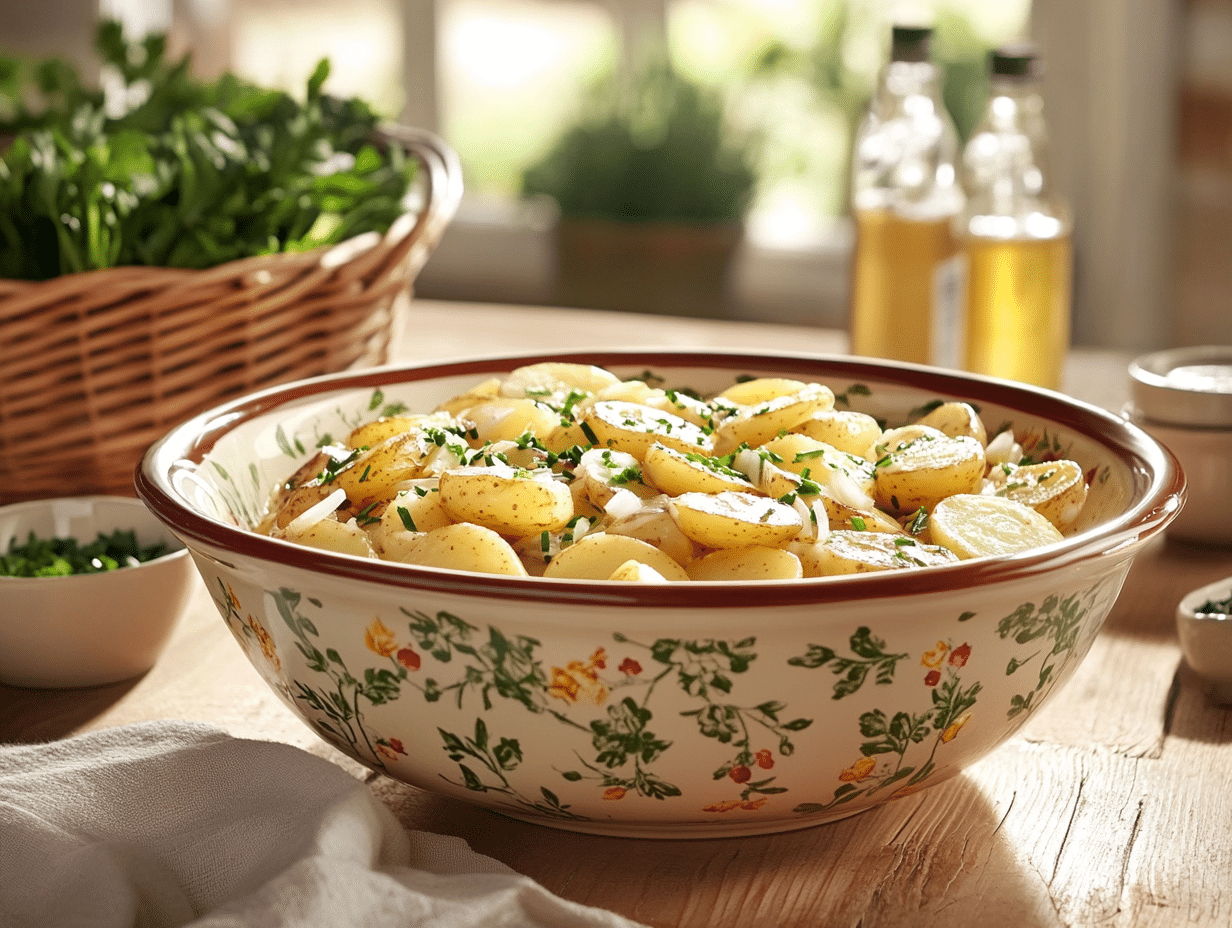
Austrian Potato Salad

Ingredients
- 800 grams waxy potatoes peeled and sliced
- 1 cup vegetable broth low sodium
- 1 medium yellow onion finely chopped
- 4 tablespoons white wine vinegar
- 2 tablespoons Dijon mustard
- 6 tablespoons neutral oil such as sunflower or canola
- 1 teaspoon salt or to taste
- ½ teaspoon ground black pepper
- 3 tablespoons fresh chives or parsley finely chopped
Instructions
- Bring a large pot of salted water to a boil, add the sliced potatoes and cook until tender but firm, about 20 minutes.
- Drain the potatoes and allow them to cool slightly. Place them in a large bowl.
- In a saucepan, warm the vegetable broth over medium heat. Stir in the chopped onions and let them simmer until they become translucent, about 5 minutes.
- Pour the onion and broth mixture over the potatoes while still warm. This allows the potatoes to absorb the flavors fully.
- In a small bowl, whisk together the white wine vinegar, Dijon mustard, oil, salt, and pepper until emulsified.
- Pour the dressing over the potatoes and gently toss to ensure every slice is coated.
- Sprinkle the chopped chives or parsley over the salad as a garnish for a fresh finish.
Notes
Nutrition
Common questions
Can I use any potato, or does the type really matter?
The type genuinely matters here. Waxy potatoes — like red-skinned, fingerling, or Yukon Gold — hold their shape after boiling and absorb the dressing without turning to mush. Starchy potatoes like russets break down too easily and will give you a chunky mash instead of a salad.
Do I have to use vegetable broth, or can I just use water?
Broth adds a layer of savory depth that water can’t replicate. If broth isn’t on hand, water with a small pinch of salt and a splash of extra vinegar is a workable fallback, but the salad will taste noticeably simpler.
How do I keep the dressing from tasting too sharp?
Balance is the fix. A small pinch of sugar, an extra tablespoon of oil, or a bit more salt will soften an overly acidic dressing. Taste it before it goes on the potatoes and adjust there, not after.
Can I make this salad the night before?
Yes, but store the potatoes and dressing separately and combine them the next day. Dressed potatoes sitting overnight soak up all the liquid and can turn soft and flat-tasting.
Is this salad meant to be served hot, cold, or somewhere in between?
Slightly warm or room temperature is the sweet spot. The dressing is poured on hot, but the salad is typically served once it has cooled down a bit — not fridge-cold, which mutes the flavor of the vinegar.
My dressing isn’t sticking to the potatoes — what’s happening?
The potatoes were probably too cool when the dressing went on. The warm starch is what allows absorption. If they’ve already cooled, gently warm the dressed salad in a pan over low heat for a minute or two and toss again.