
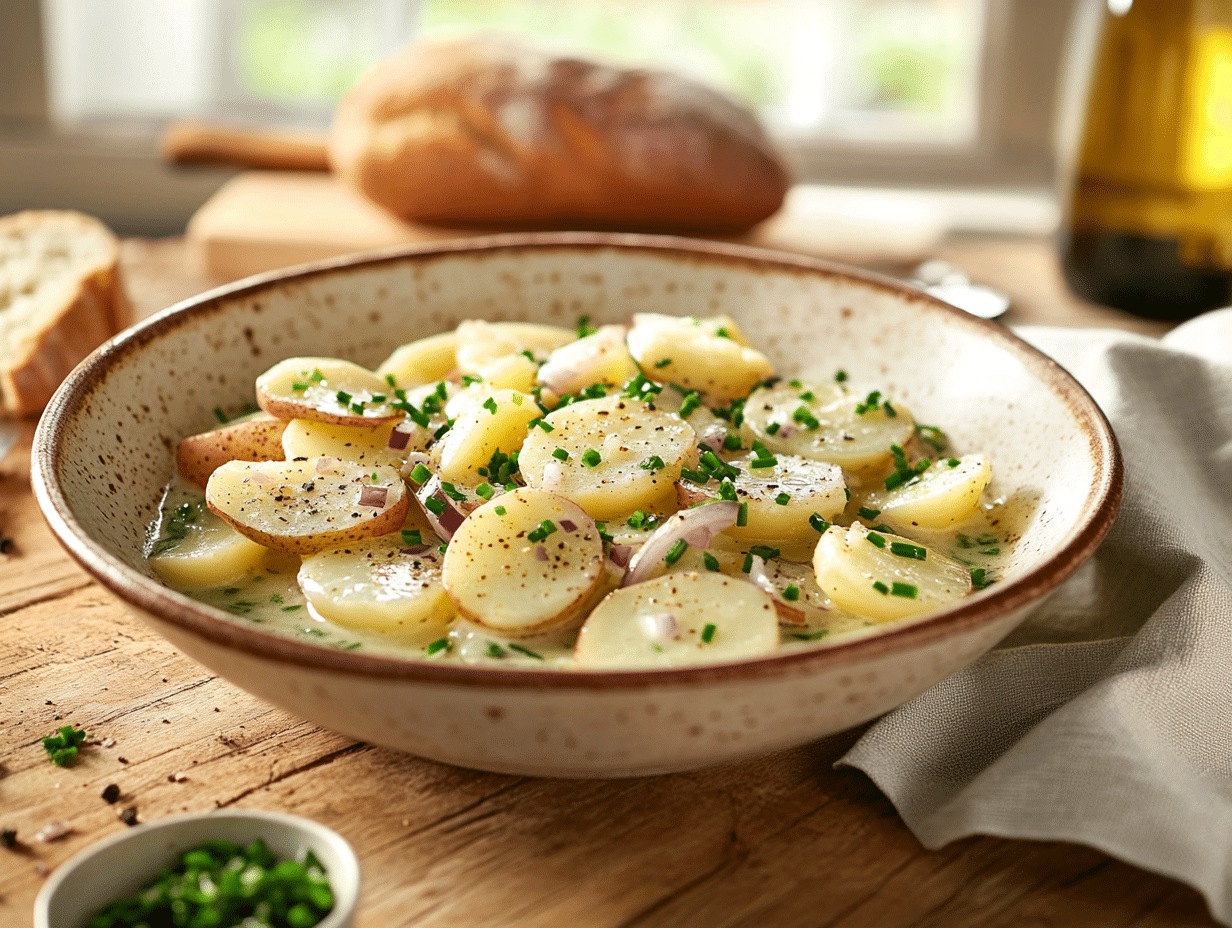
Austrian potato salad (Erdäpfelsalat) skips the mayonnaise entirely — the dressing is a warm broth-and-vinegar mixture that soaks straight into the potato slices while they’re still hot. The result is tangy, savory, and substantial enough to anchor a plate on its own. It takes about 50 minutes start to finish and uses ingredients you likely already have.
Why this recipe works
Two things make this recipe succeed. First, the potatoes go into the dressing while both are still warm — warm starch absorbs liquid readily, so the broth-vinegar mixture actually penetrates the slices rather than just coating the surface. Second, the Dijon mustard does double duty: it adds a mild sharpness and acts as an emulsifier, helping the oil and broth stay combined so every forkful gets an even hit of dressing rather than a puddle at the bottom of the bowl.
What can go wrong
- Potatoes fall apart when sliced: Waxy potatoes (like Yukon Gold or fingerlings) hold their shape; starchy varieties like Russets will crumble. If yours are still crumbling, they were overcooked — pull them at the first sign of fork-tenderness, not after.
- Dressing tastes flat: Beef broth varies a lot in saltiness and depth. Taste the dressing before adding it to the potatoes and adjust — a splash more vinegar brightens it, a pinch more salt rounds it out.
- Salad is watery by the time you serve it: Potatoes release moisture as they sit. If you’re making this ahead, drain off any pooled liquid before serving and give the salad a gentle toss.
- Red onion is too sharp: Raw red onion can overpower the other flavors. Soaking the chopped onion in cold water for 10 minutes before adding it to the warm broth mellows the bite without losing the crunch.
- Oil separates and sits on top: Add the oil while the salad is still warm and mix it in immediately — this is when the emulsion holds best. If it separates after chilling, a quick stir before serving fixes it.
Smart swaps
- Beef broth vs. vegetable stock: The recipe calls for beef broth, which adds a savory depth. Vegetable stock works well and makes the dish fully vegan — use a good-quality, low-sodium version so the vinegar and mustard stay in balance rather than getting buried under salt.
- White wine vinegar: This is worth using as written. Apple cider vinegar is the closest substitute if you’re out — it’s slightly fruitier but works. Regular white vinegar is sharper and can make the dressing harsh; use a little less if that’s all you have.
- Chives: Fresh flat-leaf parsley is a reasonable stand-in if chives aren’t available. Avoid dried herbs here — the garnish is meant to add a fresh, green note that dried herbs can’t replicate.
Storage and make-ahead
Store leftovers in an airtight container in the refrigerator for up to three days. The flavor actually improves after a few hours as the potatoes continue absorbing the dressing — making it the afternoon before you need it is a genuinely good idea. Dress it before storing, not at the table — unlike green salads, this one benefits from sitting in its dressing. Before serving cold or room-temperature leftovers, drain any pooled liquid, stir gently, and taste for seasoning; chilling dulls salt and acid, so a small splash of vinegar or a pinch of salt usually brings it back. Don’t freeze it — the potato texture breaks down.
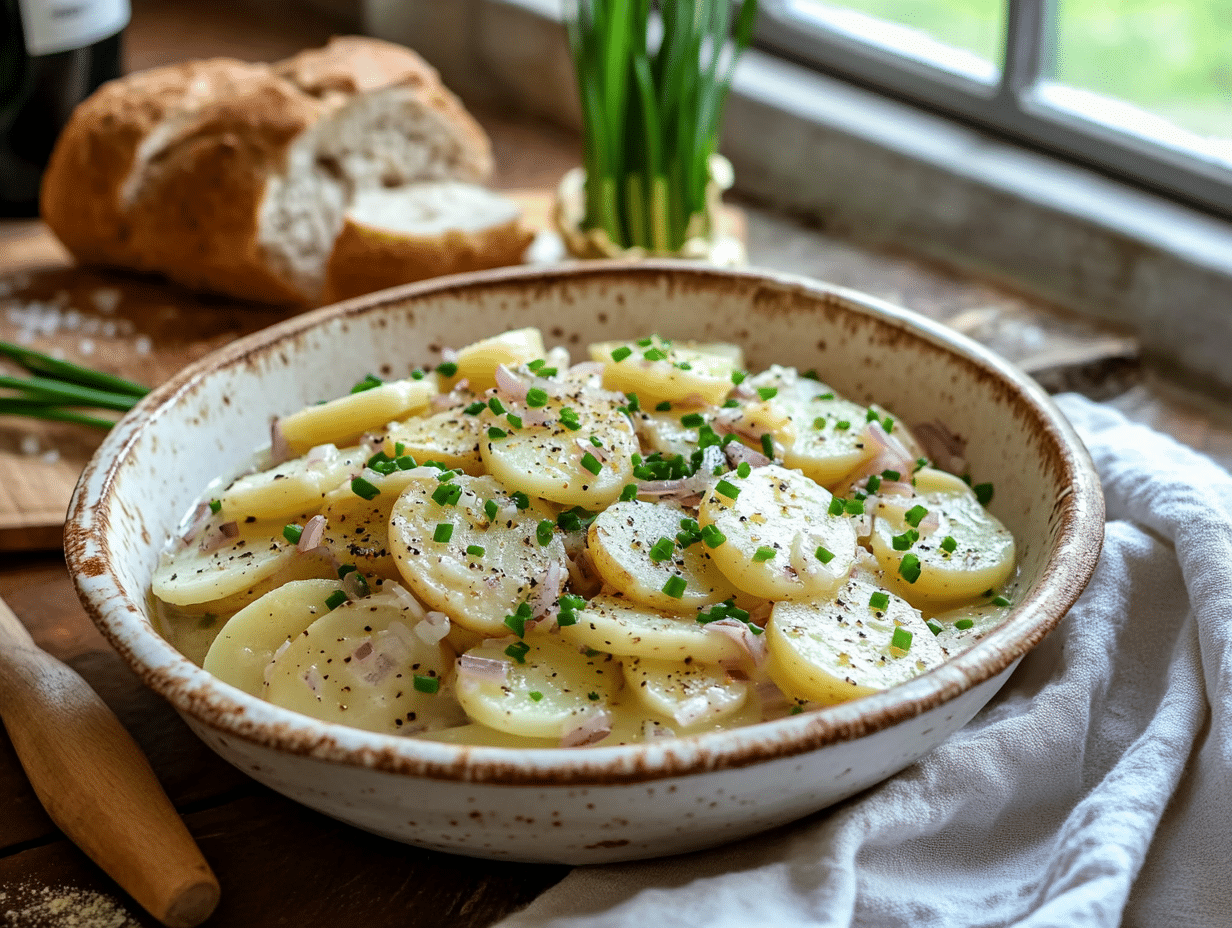
Austrian Potato Salad

Ingredients
Ingredients
- 500 grams waxy potatoes Preferably small to medium-sized for uniform cooking.
- 1 cup beef broth Homemade or low-sodium store-bought.
- ¼ cup white wine vinegar Good quality for the best flavor.
- 2 tablespoons vegetable oil Neutral-flavored such as sunflower oil.
- 1 small red onion Finely chopped for sweetness.
- 1 tablespoon Dijon mustard Adds a touch of heat and complexity.
- 2 tablespoons fresh chives Chopped, for garnish.
- 1 teaspoon salt To taste.
- ½ teaspoon ground black pepper To taste.
Instructions
- Start by boiling the waxy potatoes in salted water for about 15-20 minutes, or until they can be easily pierced with a fork. The goal is to cook them to the point of softness without allowing them to fall apart. Once done, drain and allow them to cool slightly before peeling and slicing into thin rounds.
- In a medium saucepan, gently heat the beef broth and white wine vinegar over medium heat, reaching a gentle simmer. To this, whisk in the Dijon mustard for a creamy texture and an added depth of flavor.
- Add the finely chopped red onion to the warm broth mixture, allowing it to soak up flavors and mellow in texture. Be sure to keep the mixture warm without boiling.
- In a large mixing bowl, combine the warm broth mixture with the sliced potatoes. Gently fold the ingredients together, ensuring the potatoes are thoroughly coated with the flavorful liquid.
- While the salad is still warm, add in the vegetable oil, mixing gently to maintain the salad's integrity. Season with salt and freshly ground black pepper to taste.
- Allow the salad to sit for at least 30 minutes to absorb the flavors before serving. Just before serving, top with freshly chopped chives for a vibrant burst of color and fresh, grassy notes.
Notes
Nutrition
Frequently asked questions
Can I make this potato salad ahead of time?
Yes — it’s actually better made a few hours in advance. The potatoes keep absorbing the dressing as it sits, so the flavor deepens. Make it up to 24 hours ahead, refrigerate it covered, and taste for seasoning before serving.
What kind of potatoes work best?
Waxy potatoes are essential here — varieties like Yukon Gold, red potatoes, or fingerlings hold their shape when sliced. Starchy potatoes like Russets will turn mushy once they hit the warm dressing.
How do I serve this — warm, cold, or room temperature?
Room temperature is the most forgiving option and works well as a standalone dish. Warm is traditional and brings out the savory notes of the broth; straight-from-the-fridge cold mutes the flavors, so if you’ve made it ahead, let it sit out for 15–20 minutes before serving.
Can I double the recipe for a larger group?
Yes, it scales up easily. The one thing to watch is the dressing ratio — taste as you go, because doubling the broth can mean doubling the salt, and different brands vary widely in sodium content.