
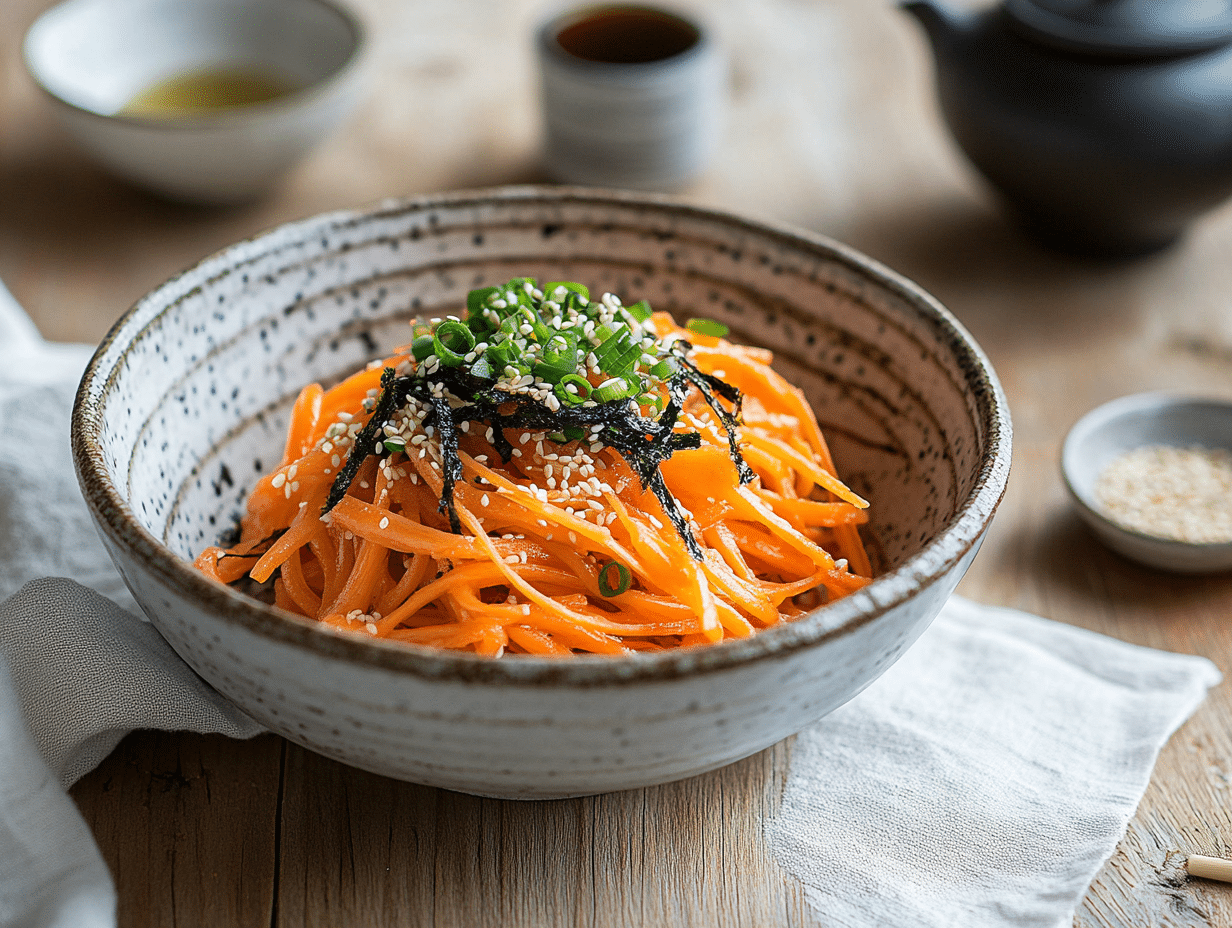
Hijiki and carrot salad is a Japanese side dish built around dried seaweed, julienned carrots, and a soy-mirin dressing that gets briefly simmered together. It takes 25 minutes start to finish, most of which is hands-off soaking time. If you want something genuinely different on a weeknight table without much effort, this is a solid option.
The short version of why this works
The key move here is simmering the hijiki directly in the dressing — not tossing it on afterward. Those 10 minutes over medium heat let the seaweed absorb the soy sauce, mirin, sesame oil, and rice vinegar all the way through, so every strand is seasoned rather than just coated on the outside. The raw julienned carrots go in off the heat, which keeps them crisp and gives the finished salad two distinct textures: tender, savory hijiki against snappy, sweet carrot. That contrast is what makes the dish interesting to eat.
What can go wrong
- Under-soaking the hijiki: Twenty minutes is the minimum. If the seaweed is still stiff in the center when you drain it, give it another 5–10 minutes. Chewy-firm is fine; crunchy and dense is not.
- Skipping the rinse before soaking: Dried hijiki can carry grit and a sharp, iodine-heavy smell. A thorough rinse under cold running water before the soak removes both. One quick dunk is not enough — rinse until the water runs clear.
- Simmering too hard: Medium heat means gentle bubbling. A rolling boil will reduce the dressing too fast and leave you with an overly salty, sticky glaze instead of a balanced coating. If the pan looks dry before the 10 minutes are up, add a tablespoon of water.
- Cutting carrots too thick: Thick batons stay raw-tasting and don’t absorb any of the residual dressing. Aim for matchsticks no wider than 2mm — a mandoline with a julienne attachment makes this fast.
- Over-salting without tasting first: Soy sauce varies a lot by brand. Low-sodium soy sauce is called for in the recipe for good reason — taste the dressing before it finishes simmering and pull it off the heat early if it’s already sharp.
Leftovers and meal prep
This salad actually improves after a rest — the carrots soften slightly and take on more of the dressing flavor. Store it in an airtight container in the refrigerator for up to 3 days. Unlike leafy salads, dress it at the table only if you want the carrots to stay maximally crisp; otherwise, combining everything and refrigerating overnight is genuinely fine here and saves you a step. Add the sesame seeds and green onions just before serving so they don’t go soft. The hijiki mixture on its own (before the carrots are added) can be made up to 2 days ahead and kept refrigerated, then combined with freshly julienned carrots when you’re ready to eat.
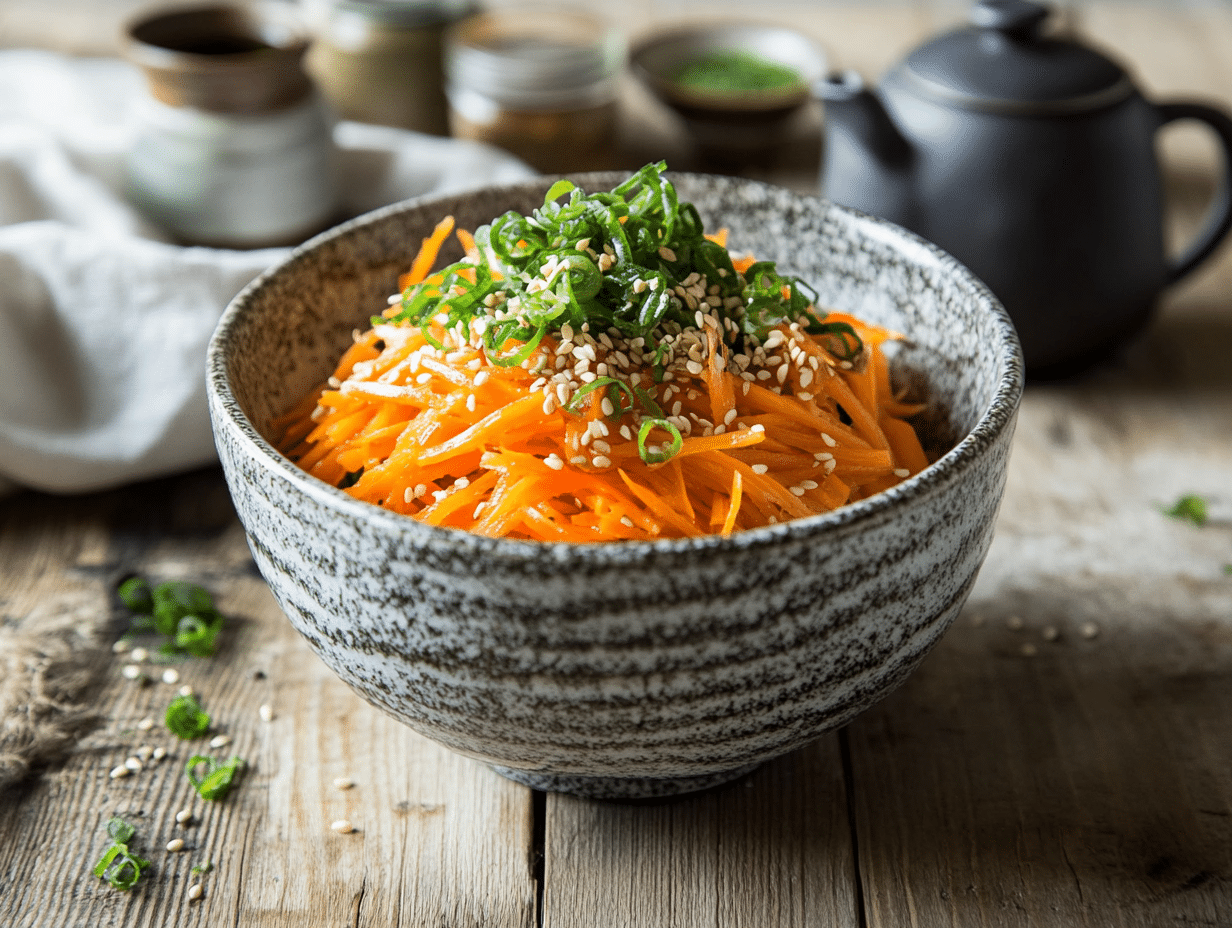
Japanese Hijiki and Carrot Salad

Ingredients
- 1 cup dried hijiki seaweed rinse well
- 2 medium carrots peeled and julienned
- ¼ cup soy sauce preferably low-sodium
- 2 tablespoons mirin
- 2 tablespoons sesame oil
- 1 tablespoon rice vinegar
- 2 tablespoons toasted sesame seeds
- 2 unit green onions finely sliced
Instructions
- Rinse 1 cup of dried hijiki seaweed well under cold water to remove any impurities.
- Soak the rinsed hijiki in a bowl of water for about 20 minutes until it rehydrates and becomes tender.
- While the hijiki is soaking, peel and julienne 2 medium carrots into thin matchsticks.
- Once rehydrated, drain the hijiki and set it aside.
- In a medium-sized saucepan, combine the drained hijiki, 1/4 cup soy sauce, 2 tablespoons mirin, 2 tablespoons sesame oil, and 1 tablespoon rice vinegar. Simmer over medium heat for 10 minutes, allowing the flavors to meld.
- Remove from heat and let it cool slightly.
- In a large mixing bowl, combine the hijiki mixture with the julienned carrots, 2 tablespoons of toasted sesame seeds, and 2 finely sliced green onions. Toss gently to combine.
Notes
Nutrition
Your questions, answered
Where do I find dried hijiki?
Most Asian grocery stores carry it in the dried seaweed section, usually in small plastic bags or boxes. It’s also widely available online — search for “dried hijiki seaweed” and you’ll find several brands. A small bag goes a long way since 1 cup dried rehydrates to roughly 2–3 cups.
Can I use fresh or pre-soaked seaweed instead of dried?
You can use pre-soaked hijiki if you find it refrigerated at an Asian market, but skip the soaking step and go straight to simmering. Fresh wakame is not a good substitute — it has a different texture and flavor that won’t hold up to the simmering step the same way.
Is this salad served warm, at room temperature, or cold?
Room temperature or cold — both work well. Straight from the refrigerator it’s a clean, firm side dish; letting it sit out for 10 minutes before serving takes the chill off and makes the sesame oil flavor more pronounced.