
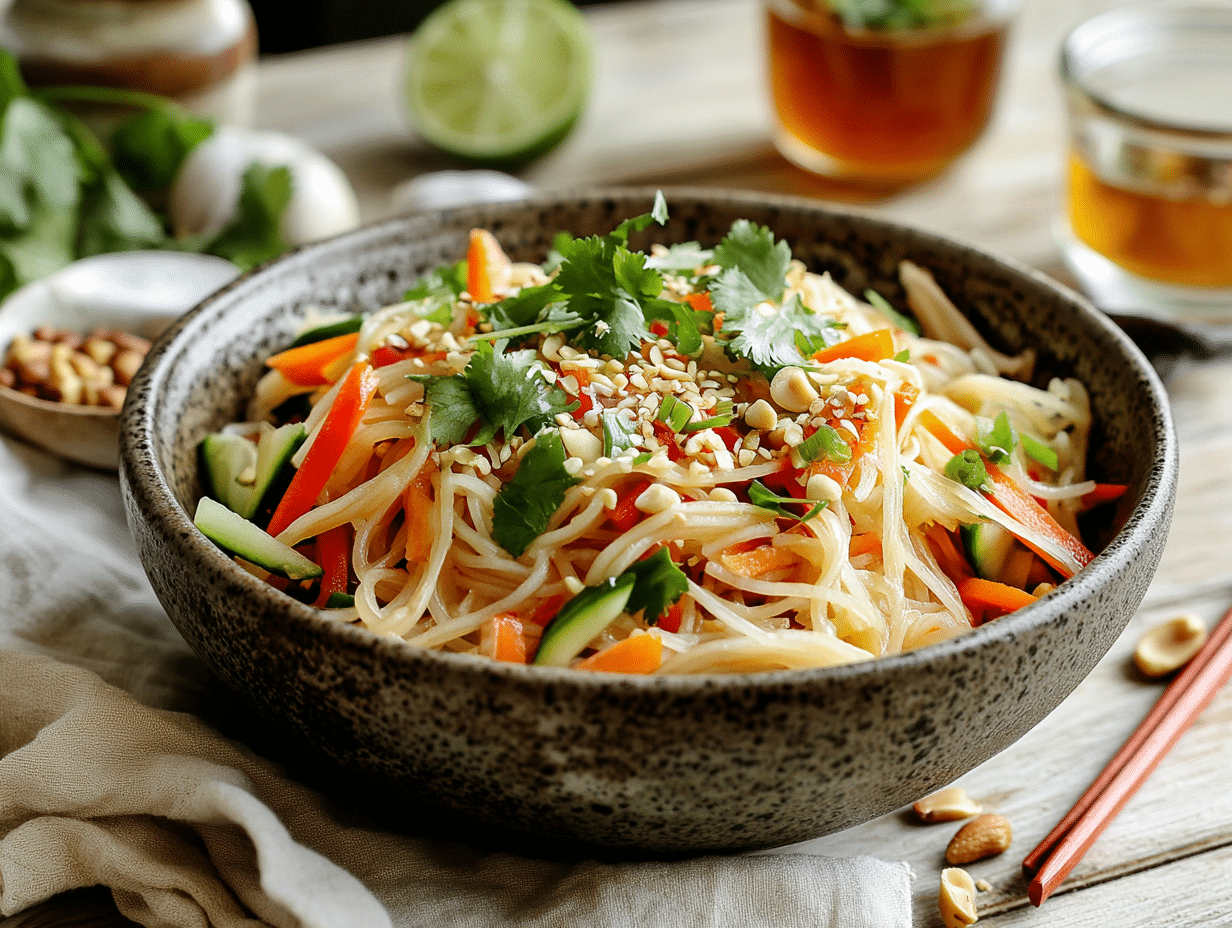
This is a rice noodle salad built around a soy-lime-sesame dressing and a pile of raw crunchy vegetables. It comes together in 30 minutes, holds up well at room temperature, and takes on protein easily — which is the real reason it earns a regular spot in the weeknight rotation.
Before you start
The two things that make or break this salad are noodle texture and dressing balance. Rice vermicelli goes from underdone to mushy in under a minute, so pull them right when they’re tender but still have a little chew, then rinse immediately under cold running water — this stops the cooking and washes off the surface starch that makes noodles clump into a solid mass. On the dressing: taste it before it goes on. Lime juice varies a lot in acidity, honey varies in sweetness, and soy sauce varies in saltiness depending on the brand. Mix, taste, adjust. A flat dressing won’t fix itself once it’s tossed.
Common problems and fixes
- Noodles clump after sitting: Toss the drained, rinsed noodles with a few drops of sesame oil right away. This keeps them separate while you prep everything else.
- Dressing pools at the bottom of the bowl: The noodles are absorbing it unevenly. Toss the noodles with half the dressing first, let them soak for two minutes, then add the vegetables and the rest of the dressing and toss again.
- Vegetables go watery and dilute the dressing: Cucumber releases a lot of liquid. If you’re not serving immediately, salt the julienned cucumber lightly, let it sit for 10 minutes, then pat it dry before adding it to the bowl.
- Peanuts go soft: Add them right before serving, not during mixing. They lose their crunch fast once they hit the dressing.
- Protein addition makes the salad dry: Grilled chicken, shrimp, or tofu soaks up dressing quickly. Make a little extra dressing — roughly 1.5x the recipe — when you’re adding a protein so the noodles don’t end up under-dressed.
Substitutions that actually work
- Rice noodles: Thin rice vermicelli is ideal, but soba noodles work well and add a slightly nutty flavor. Avoid thick pad thai-style noodles — they’re too heavy for a cold salad.
- Soy sauce: Tamari is a direct swap and keeps it gluten-free. Coconut aminos work but are noticeably sweeter, so reduce the honey by half.
- Honey: Agave syrup is a clean vegan substitute at a 1:1 ratio. Maple syrup also works but adds a faint earthiness.
- Roasted peanuts: Toasted cashews or sunflower seeds hold up similarly. Skip nuts entirely and add a tablespoon of toasted sesame seeds if allergies are a concern.
- Fresh ginger: Ground ginger is listed as a backup, but fresh makes a real difference in the dressing — it’s sharper and brighter. If you have it, use it.
Make-ahead notes
You can prep every component up to 24 hours ahead, but keep them separate until serving. Store the cooked, oiled noodles in one container, the cut vegetables in another, and the dressing in a jar in the fridge. Dress it at the table — a pre-dressed salad goes limp fast. If you’re packing this for lunch or a potluck, bring the dressing in a small container and toss everything on-site. The dressing itself keeps for up to five days refrigerated; the garlic flavor intensifies over time, so if you’re making it well ahead, hold back the garlic and add it fresh when you’re ready to serve.
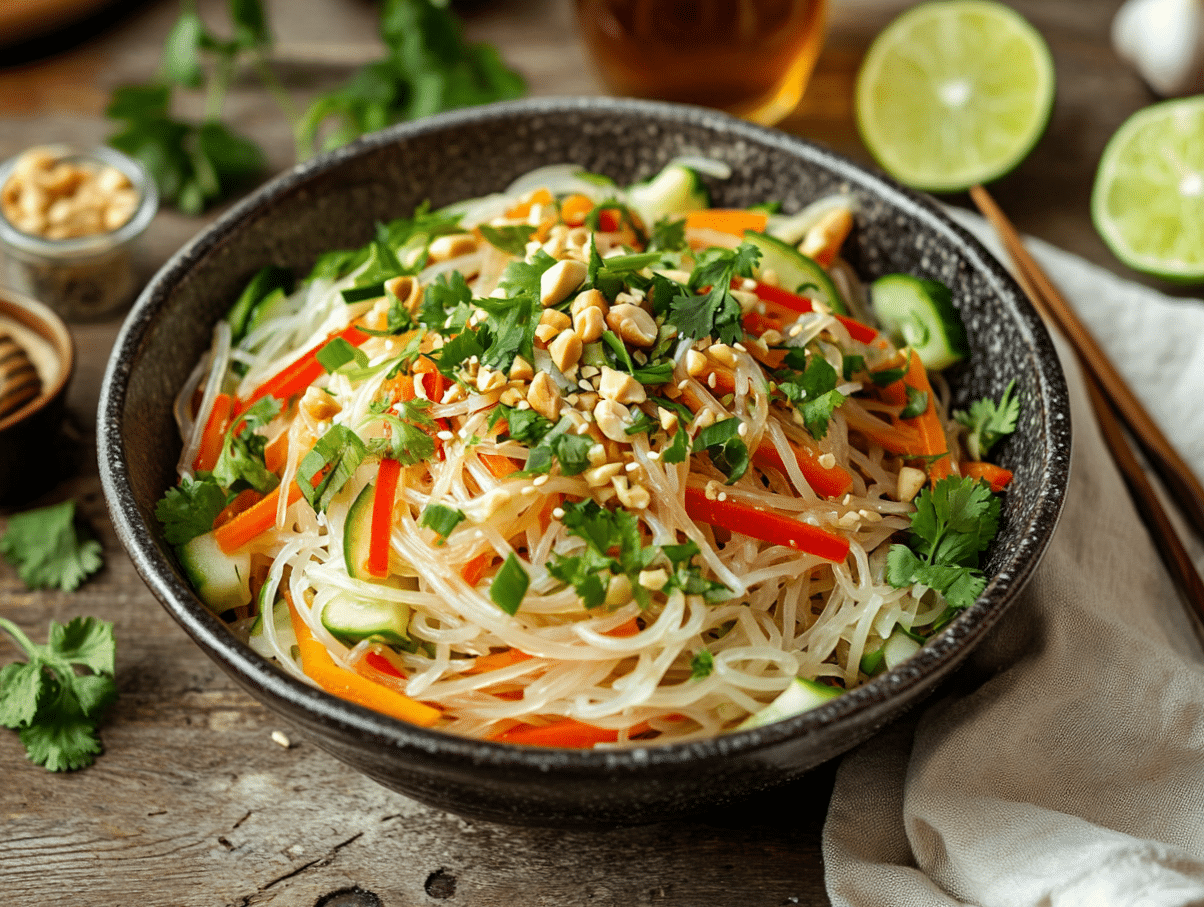
Asian Noodle Salad

Equipment
- Large mixing bowl
- Medium saucepan or pot
- Fine mesh strainer
- Small whisk or fork
- Chef's Knife
- Cutting board
Ingredients
For the Salad:
- 8 oz rice noodles (thin or vermicelli) preferably Thai or Vietnamese variety
- 1 cup shredded carrots fresh and crisp
- 1 cup red bell pepper, julienned thinly sliced for even texture
- 1 cup cucumber, julienned seedless variety like Persian or English preferred
- ½ cup fresh cilantro leaves, chopped loosely packed
- ⅓ cup scallions, thinly sliced both green and white parts
- ¼ cup roasted peanuts, chopped unsalted preferred
For the Dressing:
- 3 tbsp soy sauce use low-sodium for better control
- 2 tbsp lime juice, freshly squeezed about 1–2 limes
- 1 tbsp rice vinegar unseasoned for a cleaner flavor
- 1.5 tbsp honey or substitute agave syrup for vegan option
- 1 tsp sesame oil toasted, for aroma
- 1 clove garlic, minced fresh is key
- ½ tsp fresh ginger, grated or substitute 1/4 tsp ground ginger
Instructions
- Bring a medium saucepan of water to a boil. Add rice noodles and cook according to package instructions (typically about 3–4 minutes for vermicelli). They should be soft but still chewy. Drain and rinse under cold water thoroughly to stop the cooking and remove excess starch.
- In a small mixing bowl, whisk together soy sauce, lime juice, rice vinegar, honey, sesame oil, minced garlic, and ginger until fully combined and emulsified. Taste and adjust seasoning.
- In a large mixing bowl, toss the cooled noodles with the carrots, red bell pepper, cucumber, cilantro, and scallions.
- Pour the dressing over the noodle mixture and gently toss to coat all ingredients evenly. Let sit for 5 minutes to allow the flavors to meld.
- Top with chopped roasted peanuts just before serving for a crunchy finish.
Notes
- Make it spicy: Add a squeeze of Sriracha or slice in some bird’s eye chilies for heat.
- Protein boost: Add grilled shrimp, tofu, or shredded rotisserie chicken for a complete meal.
- Make ahead: The noodles and dressing can be prepared a day ahead. Toss with veggies and garnish just before serving.
- Nut allergy adaptation: Skip the peanuts or replace with toasted sesame seeds.
Nutrition
FAQ
What protein works best with this salad?
Chilled poached or rotisserie chicken is the easiest option — slice it thin so it distributes evenly through the noodles. Chilled shrimp, pan-seared tofu, or even a soft-boiled egg all work well; the key is that the protein should be cold or room temperature, not hot, so it doesn’t wilt the vegetables.
Can I make this salad gluten-free?
Yes — swap the soy sauce for tamari or certified gluten-free soy sauce, and confirm your rice noodles are processed in a gluten-free facility. Everything else in the recipe is naturally gluten-free.
How much salad does one batch actually make as a main dish?
The recipe yields 4 servings as a side, but realistically serves 2 to 3 as a main, especially once you add protein. If you’re feeding four people as a full meal, plan to scale the noodles and dressing up by half.