
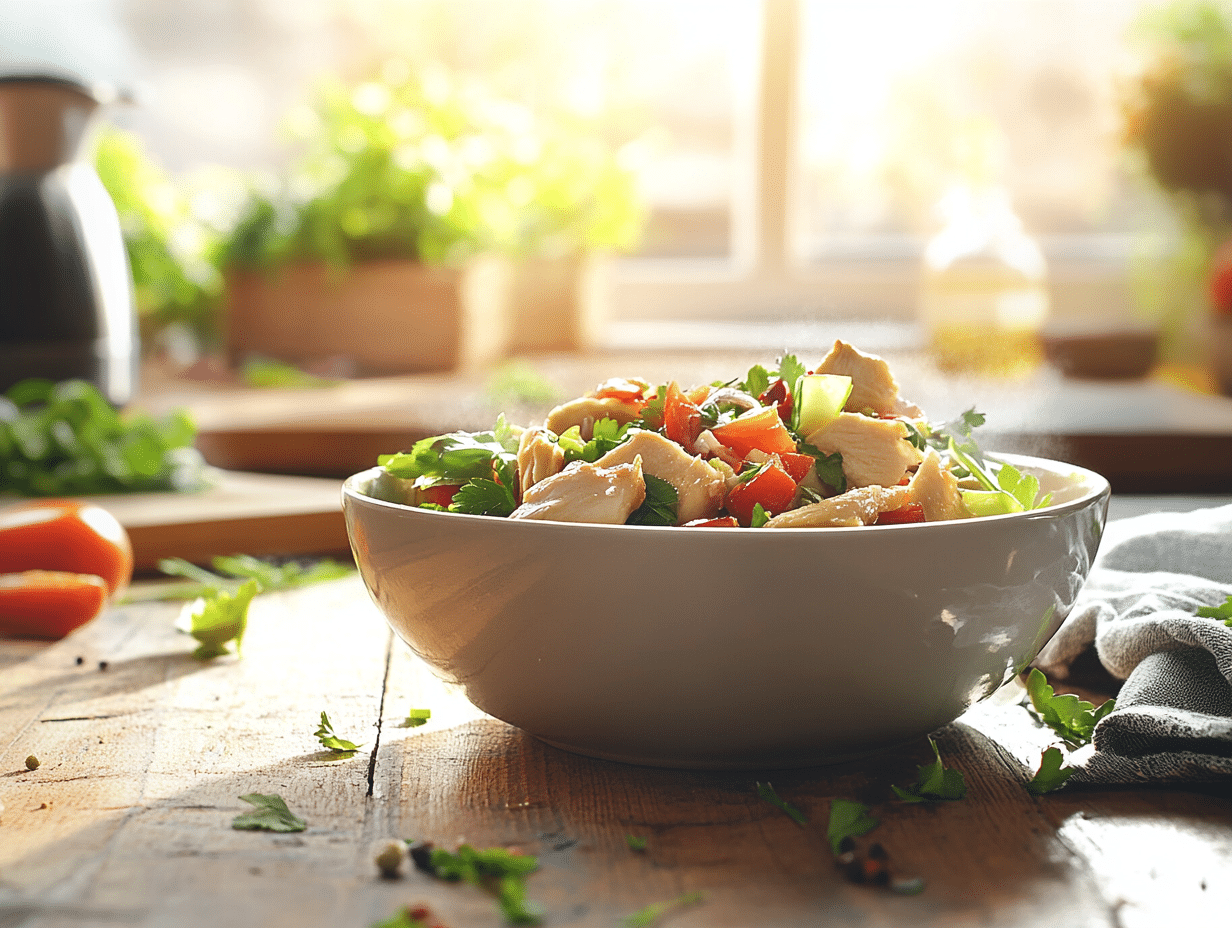
Chinese chicken salad is a shredded chicken and napa cabbage salad dressed with a soy-sesame vinaigrette and topped with crispy wonton strips or chow mein noodles. It’s a genuinely satisfying main-course salad — enough protein to keep you full, enough crunch to stay interesting, and a dressing that works on almost everything. It also holds up better than most salads when you prep the components ahead of time.
Before you start
Two things determine whether this salad is good or just okay. First, the chicken needs to be shredded while it’s still warm — warm chicken pulls apart cleanly into long strands that absorb the dressing instead of sitting on top of it. Cold chicken from the fridge tends to clump and stays bland in the center. Second, taste your dressing before it goes anywhere near the salad. Soy sauce varies a lot by brand, and rice vinegar acidity isn’t consistent either — you may need to add a small pinch of sugar or an extra splash of vinegar to get the balance right. Fix it in the bowl, not at the table.
What can go wrong
- Soggy cabbage: Napa cabbage releases water once it’s cut. If you’re not eating the salad right away, salt the shredded cabbage lightly, let it sit 10 minutes, then squeeze out the liquid before using. This keeps the base from diluting your dressing.
- Crispy toppings that go soft: Wonton strips and chow mein noodles absorb moisture quickly once they touch dressed vegetables. Keep them completely separate until you’re ready to serve — even 20 minutes in the bowl will turn them chewy.
- Dressing that separates or seizes: Sesame oil and rice vinegar don’t naturally emulsify. If your dressing looks broken or the sesame oil is pooling, whisk in a small amount of neutral oil gradually, or add a tiny squeeze of honey to help it come together.
- Bland chicken: If you’re poaching the chicken specifically for this recipe, season the poaching liquid — salt, a smashed garlic clove, a few slices of ginger. Unseasoned poached chicken tastes flat no matter how good your dressing is.
- Overdressed salad: This dressing is assertive. Start with about two-thirds of what the recipe makes, toss, then add more if needed. Dress it at the table — a pre-dressed salad goes limp fast.
Substitutions that actually work
- Napa cabbage: Green cabbage works and adds more crunch, but shred it thin — it’s tougher than napa. A bag of pre-shredded coleslaw mix is a legitimate shortcut.
- Rice vinegar: Unseasoned is what you want. Seasoned rice vinegar already has sugar and salt added, which will throw off the dressing balance.
- Wonton strips: Chow mein noodles from a can are the easiest swap. Crushed ramen noodles (uncooked) also work and are usually cheaper. For a gluten-free version, thin rice crackers broken into pieces hold their crunch reasonably well.
- Toasted almonds: Roasted cashews or sunflower seeds are both good here. Sunflower seeds are especially useful if you’re making this for someone with a tree nut allergy.
- Rotisserie chicken: A fully acceptable swap for poached or grilled chicken — just remove the skin and shred the meat while it’s still warm from the store.
Make-ahead notes
This salad is well-suited to prepping in stages across the week. The shredded chicken keeps refrigerated for up to four days in an airtight container. The dressing lasts a full week in a sealed jar in the fridge — shake it well before using since it will separate. Shredded cabbage and sliced vegetables can be prepped two to three days ahead; store them dry in a container lined with a paper towel to absorb any moisture. The crispy toppings are the one component that cannot be made ahead — they go soft within an hour of contact with anything wet, so store them at room temperature in a zip-top bag and add them only when you’re building individual portions. If you’re packing this for lunch, keep the dressing and the crunchy toppings in separate small containers and combine everything just before eating.
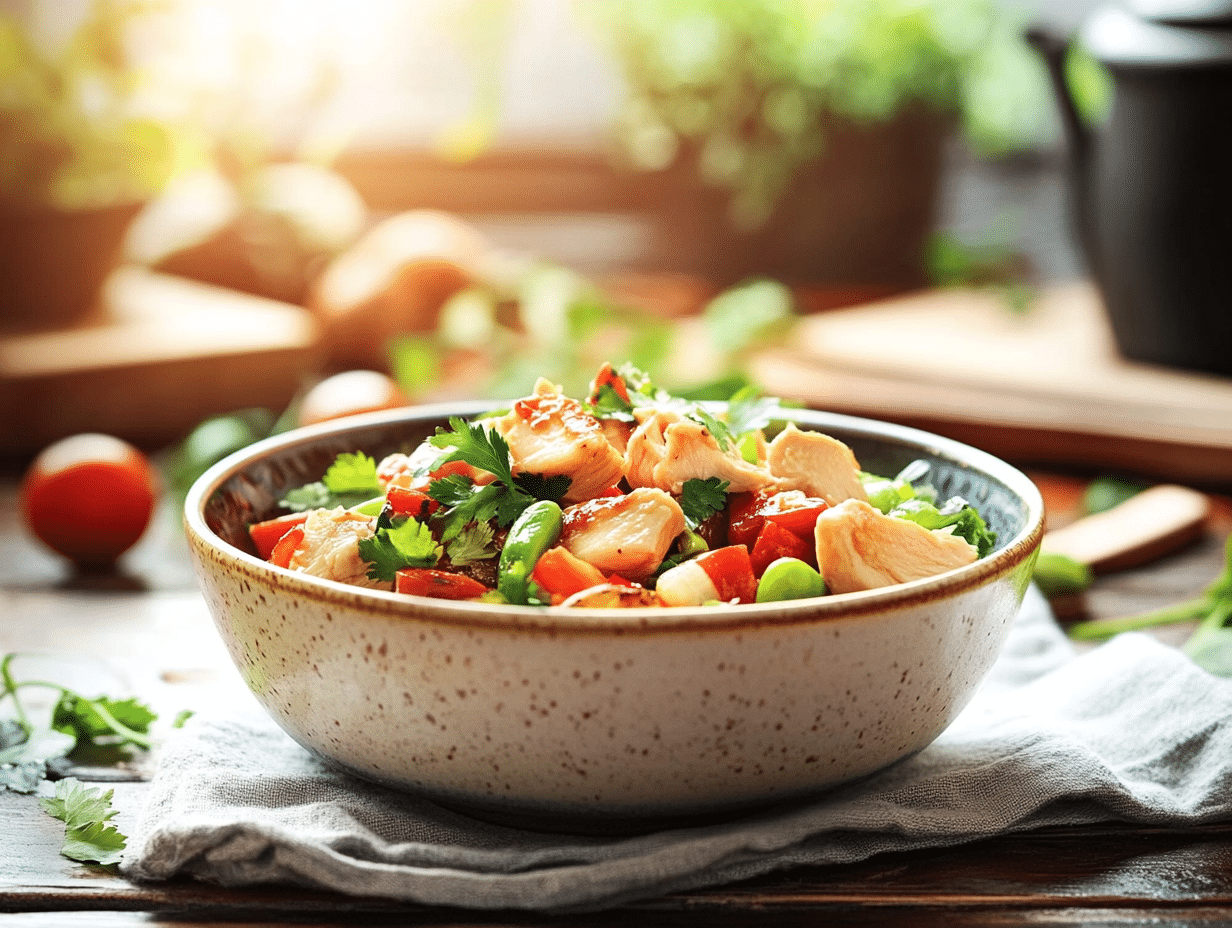
Crisp & Colorful Chinese Chicken Salad

Equipment
- Medium saucepan
- Mixing bowls
- Whisk
- Chef's Knife
- Cutting board
- Salad spinner or clean kitchen towel
Ingredients
For the Salad:
- 2 cups shredded napa cabbage about half a small head
- 1 cup shredded red cabbage for color and crunch
- 1 cup carrots, julienned preferably fresh and sweet
- 1 cup snow peas, thinly sliced blanched briefly for tenderness
- 3 pieces scallions finely sliced, both green and white parts
- 2 cups shredded cooked chicken breast poached or rotisserie chicken
- ½ cup crispy wonton strips optional for crunch
- 2 tablespoons toasted sesame seeds for garnish and subtle nuttiness
For the Dressing:
- ¼ cup soy sauce preferably low sodium
- 2 tablespoons rice vinegar unseasoned
- 1 tablespoon honey or maple syrup for a vegan option
- 1 teaspoon toasted sesame oil adds deep nutty aroma
- 1 teaspoon fresh ginger, grated
- 1 clove garlic, minced preferably freshly minced
- 3 tablespoons vegetable oil neutral oil like grapeseed or canola works well
Instructions
- In a medium bowl, combine napa cabbage, red cabbage, carrots, snow peas, and scallions. Use a salad spinner or pat dry with a towel to remove any moisture for better crunch and dressing adherence.
- Add the cooked, shredded chicken into the salad and gently toss to blend evenly.
- In a separate bowl, whisk together the soy sauce, rice vinegar, honey, sesame oil, ginger, garlic, and vegetable oil until emulsified and smooth. Taste and adjust seasoning as needed (add a splash of lime juice for brightness if desired).
- Drizzle the dressing over the salad and toss gently to coat without bruising the vegetables.
- Garnish with toasted sesame seeds and crispy wonton strips. Serve immediately to maintain maximum crunch.
Notes
- For vegetarians, replace chicken with baked tofu.
- Add mandarin orange segments for a touch of citrus.
- If prepping ahead, store vegetables and dressing separately, combining just before serving.
Nutrition
Your questions, answered
Can I use rotisserie chicken instead of cooking chicken from scratch?
Yes, rotisserie chicken works well here. Pull the meat while it’s still warm so it shreds easily, and skip the skin — it turns rubbery once it’s mixed into a cold salad.
How long does Chinese chicken salad keep in the fridge?
The assembled, dressed salad is best eaten the same day. If you store the components separately — chicken, vegetables, dressing, and crispy toppings all in their own containers — everything except the toppings will hold for three to four days.
My dressing tastes too salty. How do I fix it?
Add a small amount of rice vinegar and a pinch of sugar to balance it out. A little extra sesame oil also helps mellow saltiness without watering the dressing down.
Can I make this salad without the crispy wonton strips or noodles?
You can, but the texture contrast is a big part of what makes this salad satisfying. Toasted sliced almonds or roasted sunflower seeds are good gluten-free alternatives that still give you that crunch.