
Arugula pesto is a straightforward swap for basil pesto — same process, sharper flavor, and a good use for arugula before it wilts. This version uses walnuts instead of pine nuts, which are easier to keep on hand and hold up well against arugula’s peppery bite. Ten minutes of active work, one food processor to wash.
Before you start
Two things matter here. First, toast the walnuts — raw walnuts have a slightly bitter, papery quality that competes with arugula’s own bitterness. Eight minutes at 350°F or a few minutes in a dry pan fixes that, but let them cool completely before they go in the processor. Warm nuts will steam the arugula and turn the pesto a dull green. Second, add the olive oil with the processor running, not all at once. Pouring it in a slow, steady stream gives the pesto a cohesive, spreadable texture rather than a greasy, broken one. Scrape the sides at least once mid-process — the garlic and cheese tend to cling to the walls and won’t incorporate otherwise.
Substitutions that actually work
- Walnuts: Pecans are the closest swap — similar fat content and a mild sweetness that works with arugula. Almonds work but produce a drier, denser paste; add a splash more olive oil if you go that route.
- Parmesan: Pecorino Romano works and adds a saltier, sharper edge. Taste before adding any extra salt — Pecorino is noticeably saltier than Parmesan.
- Lemon: Don’t skip both the zest and the juice. The zest carries the citrus flavor; the juice provides acidity that keeps the color brighter. One without the other is noticeably flat.
- Arugula: Baby arugula and mature arugula both work. Mature arugula is more peppery — if it’s very sharp, a small handful of baby spinach mixed in will mellow it without changing the texture.
If something goes sideways
- Pesto looks grey or brown: Oxidation from the arugula. It’s still safe to eat, but to prevent it, press plastic wrap directly onto the surface before refrigerating — air contact is the culprit.
- Texture is grainy or crumbly: The oil was added too fast or the nuts weren’t processed finely enough before the oil went in. Blend longer and drizzle in a tablespoon of warm water while the processor runs to help it come together.
- Flavor is too bitter: Arugula’s bitterness amplifies when it’s blended. A small squeeze of extra lemon juice and a pinch more salt will balance it — salt suppresses bitterness more effectively than adding more cheese does.
- Pesto is too thick to spread: Add olive oil one teaspoon at a time with the processor running until it loosens. The recipe’s ¾ cup is a guideline; humidity, arugula water content, and nut freshness all affect the final consistency.
- Garlic flavor is too sharp: Raw garlic intensifies as the pesto sits. Use one clove instead of two if you’re making it more than a few hours ahead, or blanch the cloves in boiling water for 30 seconds before adding them.
Make-ahead notes
This pesto keeps well in the fridge for up to two weeks in a sealed jar — pour a thin layer of olive oil over the surface each time you use it to slow oxidation. For longer storage, freeze it in an ice cube tray, then transfer the frozen portions to a bag; each cube is roughly one to two tablespoons, which is a useful single-serving amount. Skip the Parmesan before freezing and stir it in after thawing, as the recipe card notes — cheese doesn’t freeze cleanly and turns grainy. When you’re using it as a pasta sauce or pizza spread, pull it straight from the fridge and use it cold or at room temperature. Toss it with pasta at the table rather than back on the stove — reheating breaks the emulsion and the oil separates.
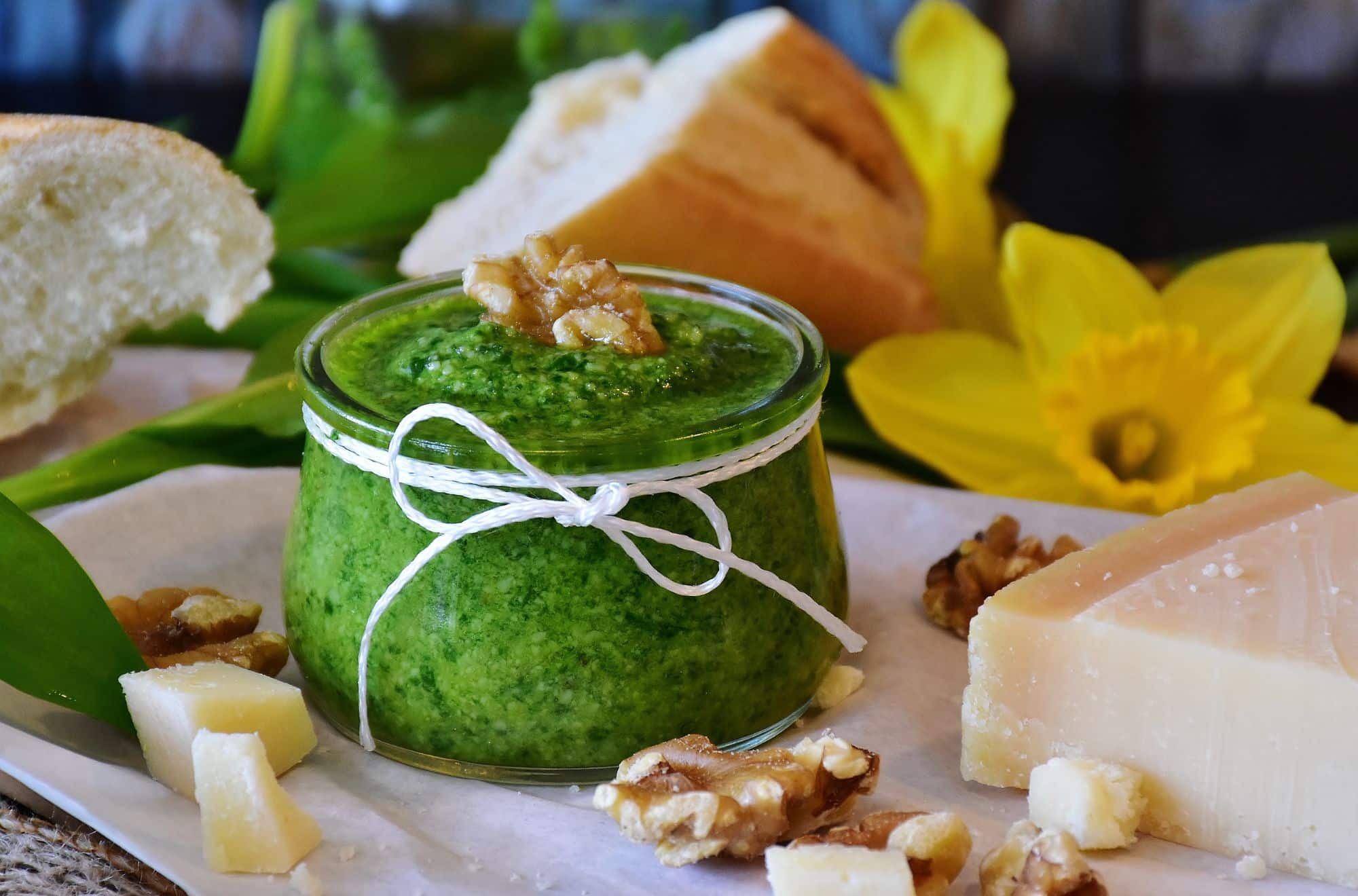
Easy Arugula Pesto

Ingredients
- ½ cup walnuts
- 2 large handfuls arugula
- 2 large cloves garlic cut in half
- ½ cup parmesan cheese coarsely shredded
- 1 medium lemon juice
- 1 medium lemon zest
- ¾ cup olive oil extra virgin
- 1 pinch salt
- 1 pinch ground black pepper
Instructions
- Toast the walnuts in the oven at 350°F for 8 minutes or on the stove over medium heat. You just want them very lightly toasted and fragrant. Let them cool.
- Pulse the arugula leaves, cooled walnuts, and garlic cloves until finely chopped in a food processor. Add the shredded cheese, lemon zest, and lemon juice and pulse again a few times.
- Turn the processor on and add the EVOO in a steady stream. Continue until you make a smooth paste. Scraping the sides is necessary.
- Season with salt and pepper and store in the fridge. Should keep a few weeks. If you decide to freeze it, don’t add the cheese. Add it after you thaw it.
Nutrition
Frequently asked questions
Can I make this without a food processor?
Yes, but it takes effort. A high-powered blender works nearly as well — add the oil through the lid opening while it runs. A mortar and pestle is the traditional method and produces a slightly coarser, more rustic texture; start with the garlic and salt, then add the nuts, then the arugula in batches.
How much pesto does this recipe make?
Roughly one cup, which is enough to sauce pasta for four people or spread generously on two medium pizzas. The recipe card lists four servings at about 513 calories each, which reflects a full quarter-cup serving — a typical pasta coating uses closer to two tablespoons per person.
Does arugula pesto taste the same as basil pesto?
No — it’s noticeably more peppery and slightly bitter where basil pesto is sweet and herby. That sharpness is the point, and it pairs particularly well with mild bases like fresh mozzarella, plain pasta, or flatbread where basil pesto can sometimes get lost.
Do I need to blanch the arugula first?
No. Unlike spinach pesto, arugula goes in raw and that’s what gives it its flavor. Blanching would mute the peppery quality and make the texture watery.
What can I use this pesto on besides pasta?
It works as a pizza base, a sandwich spread, a dip for roasted vegetables, or stirred into scrambled eggs. It also makes a solid salad dressing when thinned with a little extra lemon juice and a splash of water to loosen the consistency.