
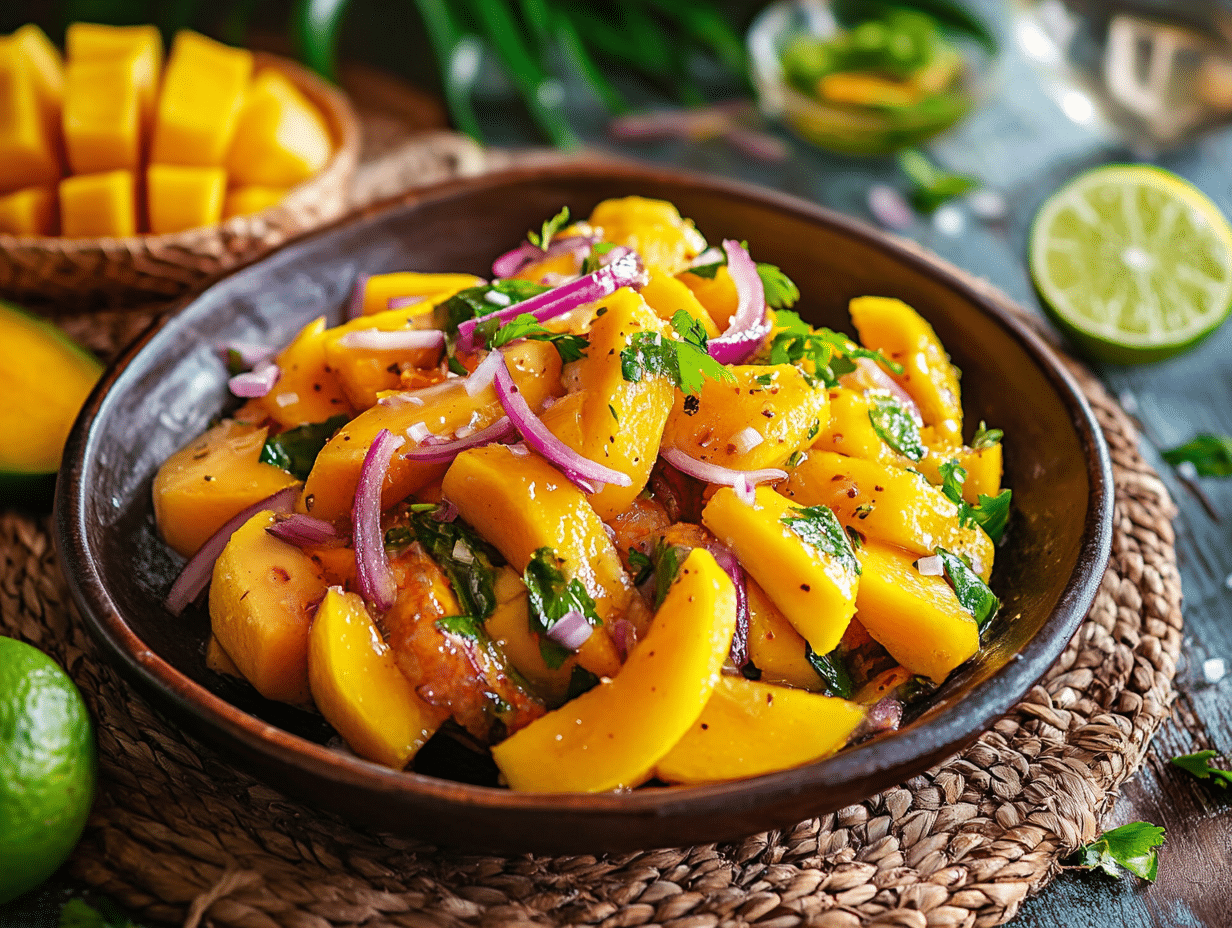
The “Filipino Green Mango and Bagoong Salad” is a quintessential representation of the vibrant culinary heritage of the Philippines. It highlights the Filipino palate’s love for bold and contrasting flavors, showcasing the country’s ability to turn simple, locally-sourced ingredients into extraordinary food experiences.
This dish holds a significant place in Filipino cuisine, often celebrated as both an appetizer and a snack. At its core are two iconic ingredients: “green mangoes” and “bagoong”. Green mangoes, known locally as “manggang hilaw,” are a beloved staple in the Philippines. These unripe mangoes have a firm texture and a tantalizingly sour profile, which provides the perfect canvas for bagoong, a savory shrimp paste. Bagoong is a flavor-packed, umami-rich condiment steeped in Filipino tradition. Its distinct aroma and salty depth are balanced by subtle hints of sweetness and earthiness, making it a unique pairing for the tangy mango.
The salad carries a heritage that traces back to Filipino street food culture. Vendors selling green mangoes often serve slices with bagoong on the side for dipping. This popular street snack evolved over time, transforming into a more composed dish as it gained a place on restaurant menus and at family celebrations. The addition of lime juice and a hint of sugar in this salad balances the sharpness of the green mango and enhances the complexity of the bagoong, while thinly sliced red onions impart texture and a mild pungency, adding another delightful layer to the flavor profile.
The simplicity of both preparation and presentation makes this salad a true showcase of how everyday Filipino foods are elevated with creativity and balance. In about 20 minutes, you can create a dish that doesn’t just awaken the palate—it tells a story of island culture and culinary ingenuity.
What truly makes this salad shine is its adaptability. While the recipe calls for lime juice, you can opt for calamansi—a native citrus fruit often hailed as the “Philippine lemon”—for a more authentic twist. Some even sauté bagoong before mixing it into the salad to tone down its pungency and intensify its sweetness. No matter the adjustments, this recipe inspires endless variations while honoring its roots.
Traditionally enjoyed as a side dish or pre-meal appetizer, the Filipino Green Mango and Bagoong Salad pairs wonderfully with grilled or fried meats, softening their richness with its zesty punch. It also stands on its own as a satisfying treat during the hot, tropical months—a refreshing cure for humid days.
Ultimately, the Filipino Green Mango and Bagoong Salad is more than just a dish to enjoy with family and friends; it’s an ode to the Philippines’ respect for seasonal ingredients, a celebration of its communal spirit, and a tribute to its gastronomic identity. Whether you’re savoring it on the streets of Manila or replicating the recipe at home, this dish captures the heart of Filipino cuisine—endlessly flavorful, unapologetically bold, and undeniably satisfying.
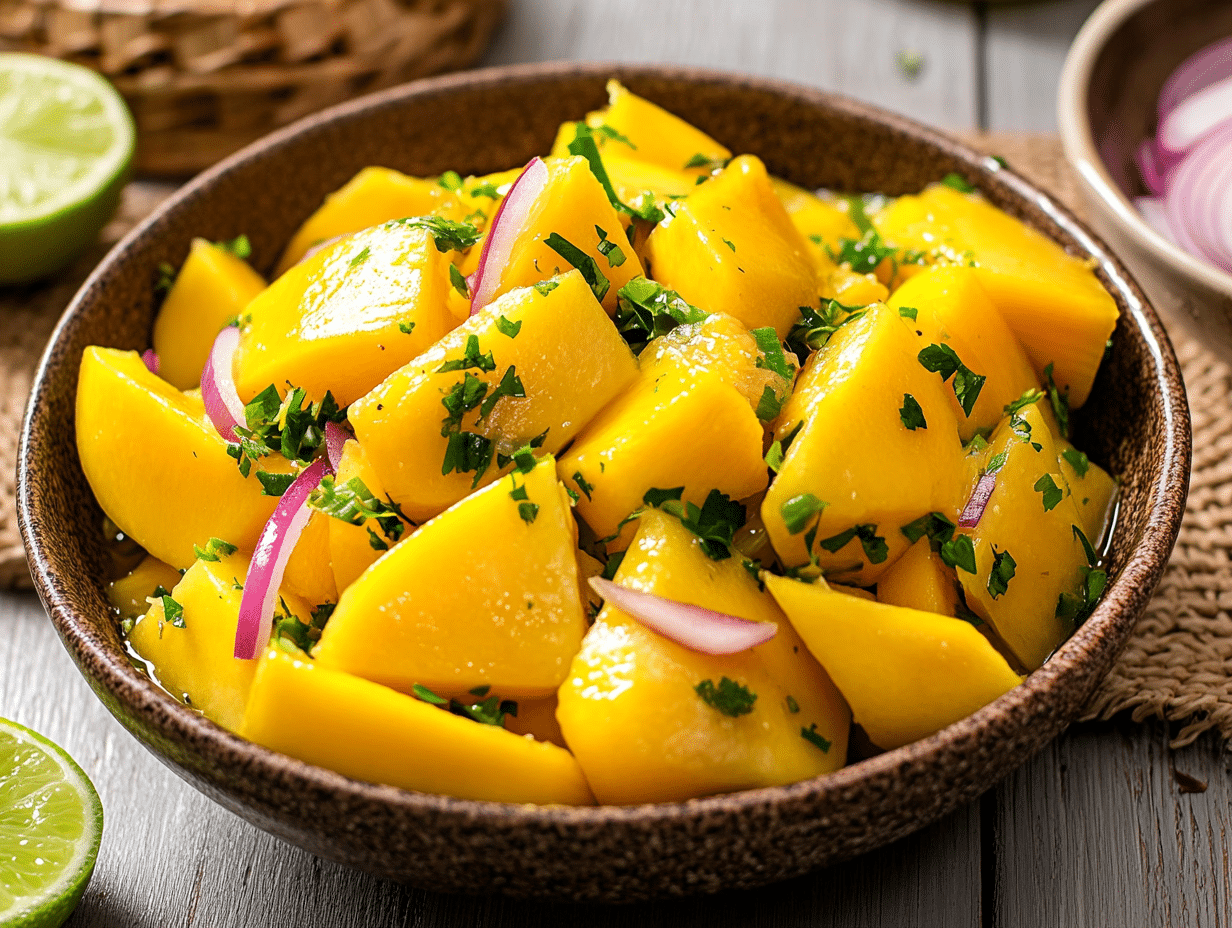
Filipino Green Mango and Bagoong Salad

Ingredients
- 2 pieces Green mangoes Preferably sour and firm
- ¼ cup Bagoong alamang Cooked shrimp paste, adjust to taste
- 2 tablespoons Lime juice Freshly squeezed
- 1 tablespoon Sugar White or coconut sugar
- 1 piece Red onion Small, thinly sliced
Instructions
- Peel the green mangoes and slice them into thin strips. The mangoes should be sour and crisp to offer the perfect counterbalance to the rich bagoong.
- In a bowl, combine the mango strips with the bagoong alamang. Adjust the amount of bagoong to your desired saltiness.
- Add lime juice and sugar. Stir to combine well, allowing the flavors to meld together harmoniously.
- Toss in the thinly sliced red onion for an added crunch and mild pungency. Mix until evenly distributed.