
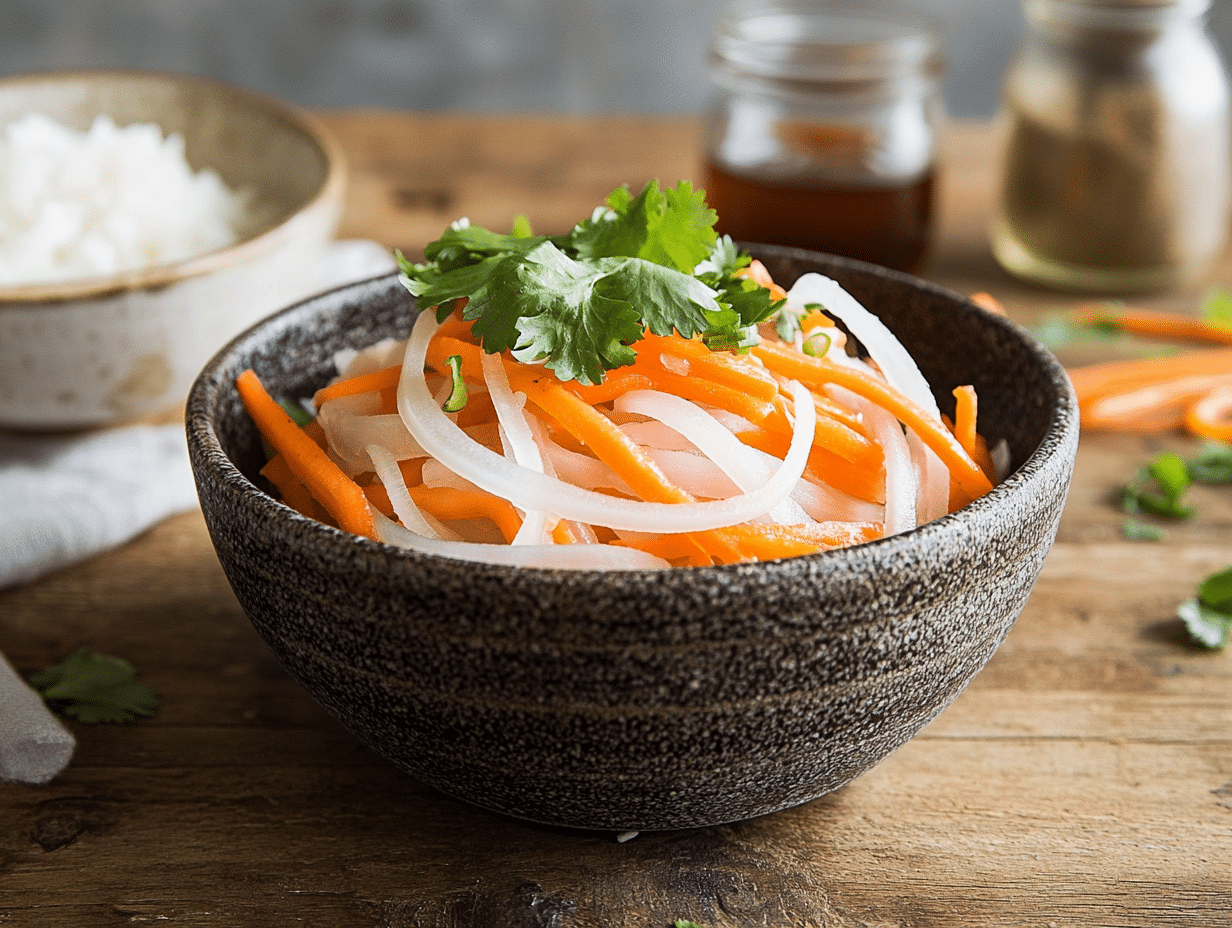
This is a quick-pickled daikon and carrot salad dressed in a rice vinegar brine with garlic. It takes 20 minutes of hands-on work, then the fridge does the rest. Make a jar on Sunday and you have a ready-to-go side all week.
The short version of why this works
Two things make this salad reliable. First, the brine ratio — equal parts rice vinegar and water, with enough sugar and salt to pull moisture from the vegetables without making them limp — keeps the daikon and carrot crisp rather than soggy. The salt draws out just enough liquid so the vegetables absorb the brine instead of sitting in diluted water. Second, time in the fridge is doing real work here: one hour gives you a light pickle, but overnight transforms the garlic from sharp and raw to mellow and savory throughout the whole batch. The longer rest is worth it if you can plan ahead.
Troubleshooting
- Brine tastes flat after chilling: Cold mutes salt and acid. Taste the salad straight from the fridge and add a small pinch of salt before serving if it seems dull — it usually needs it.
- Daikon smells sulfurous after a day or two: That’s normal for daikon stored in brine. Rinse the vegetables briefly under cold water before serving and the smell disappears.
- Julienne strips are uneven and some go mushy while others stay hard: Inconsistent thickness is the culprit. A mandoline with a julienne attachment cuts uniform strips in a fraction of the time and solves this completely — keep it at the same setting throughout.
- Garlic turns blue-green in the jar: This is a harmless chemical reaction between the garlic’s sulfur compounds and the acid. The flavor is unaffected; it’s safe to eat.
- Vegetables float above the brine and the top layer doesn’t pickle evenly: Press a small piece of plastic wrap directly onto the surface of the vegetables before putting the lid on — this keeps everything submerged without needing extra brine.
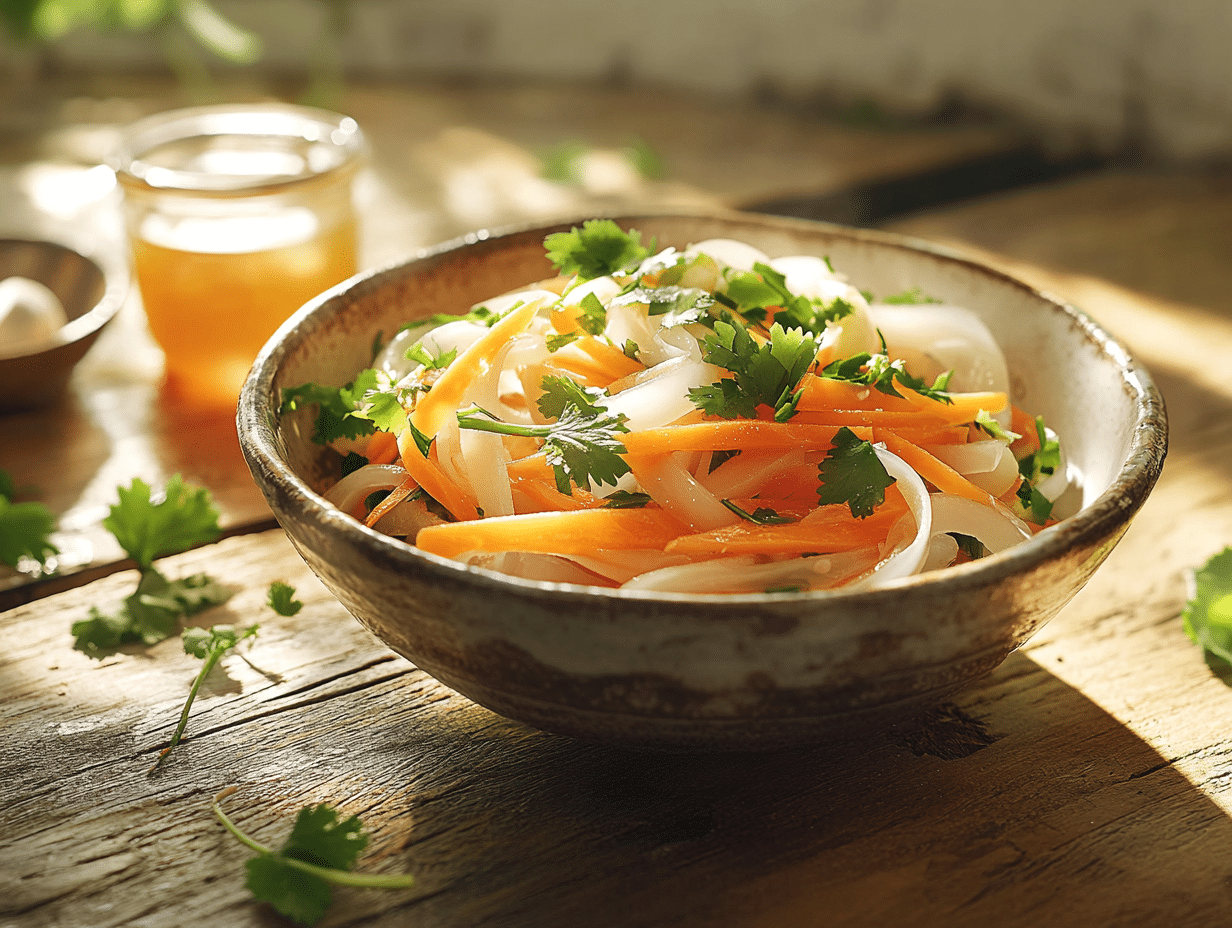
Mongolian Pickled Radish and Carrot Salad

Ingredients
Pickling Solution
- ½ cup rice vinegar preferably unseasoned
- ½ cup water
- ¼ cup sugar organic if possible
- 1 teaspoon salt sea salt recommended
Salad Ingredients
- 2 medium carrots peeled and julienned
- 1 medium daikon radish or similar type, peeled and julienned
- 1 clove garlic thinly sliced
- 1 small handful fresh cilantro leaves optional, for garnish
Instructions
- In a small saucepan over medium heat, combine the vinegar, water, sugar, and salt. Stir gently, heating until the sugar dissolves entirely, producing a clear liquid. Do not bring it to a boil. Remove from heat and allow it to cool slightly.
- Meanwhile, place the julienned carrots and radish into a large bowl, ensuring even distribution. Add the thinly sliced garlic into the mixture.
- Pour the slightly cooled pickling liquid over the carrot and radish mixture. Toss well to ensure that every piece is coated. Press down the vegetables gently to submerge them in the liquid.
- Cover and refrigerate the salad for at least 1 hour to allow the flavors to meld. For a more intense taste, leave overnight.
- Before serving, drain excess liquid and gently toss the salad. Garnish with fresh cilantro leaves if using.
Notes
Nutrition
FAQ
How long does this keep in the fridge?
It keeps well for up to five days in a sealed container. After that the vegetables stay safe but start to lose their crunch, so plan your batch size around what you’ll actually eat in a week.
Can I use regular red radishes instead of daikon?
Yes, though the result is different. Red radishes are smaller and more peppery, and they soften faster in the brine, so check them at 30 minutes rather than waiting a full hour. They also bleed color into the brine, which turns everything pink.
Do I have to heat the brine, or can I just stir everything together cold?
Heating is the reliable method because sugar doesn’t dissolve evenly in cold liquid. If you skip it, you risk uneven sweetness and undissolved granules settling at the bottom of the jar.
Should I drain the brine before storing leftovers, or leave the vegetables sitting in it?
Leave the vegetables in the brine for storage — draining them early causes them to dry out in the fridge. Drain only the portion you’re about to serve, right before it hits the table, because a pre-drained salad sitting out goes limp fast.