
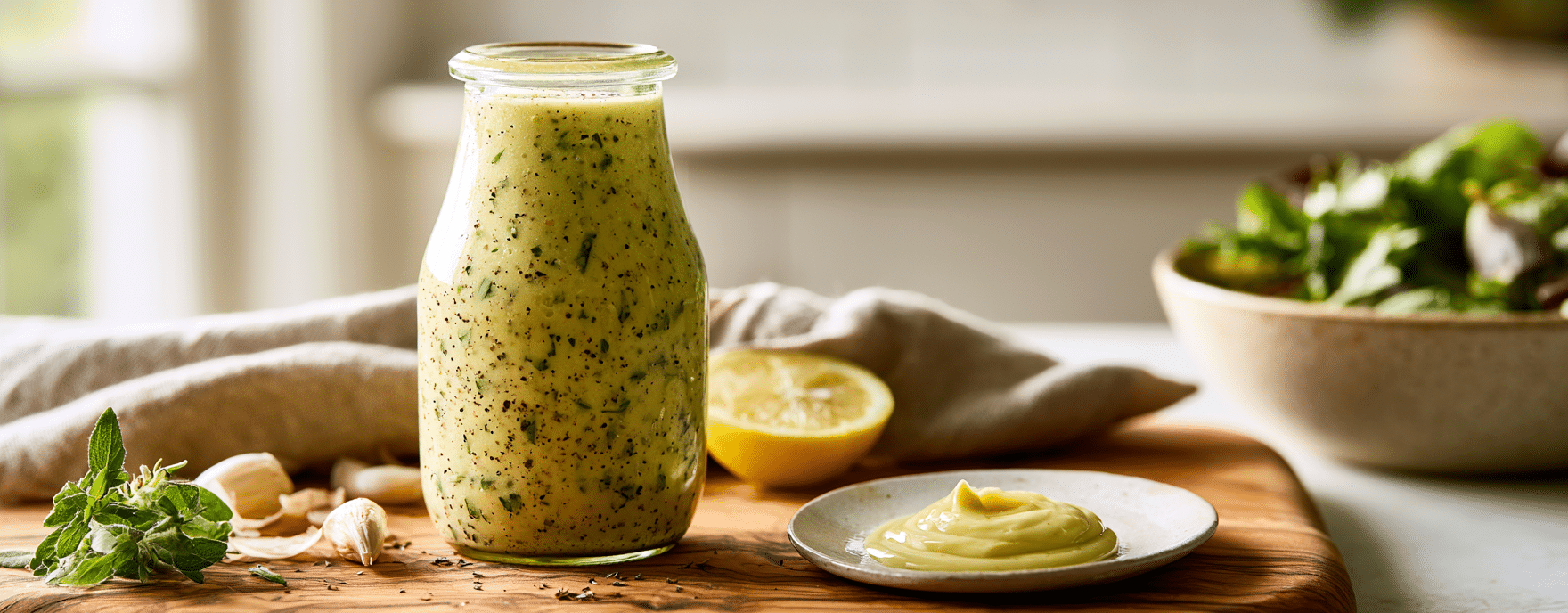
This is a straightforward emulsified vinaigrette built on olive oil, white wine vinegar, garlic, and dried oregano. It takes 10 minutes and makes enough to dress salads for the week. The honest reason to make it: the ratio of oil to vinegar and the way the food processor handles the garlic gives you a dressing that actually clings to vegetables instead of pooling at the bottom of the bowl.
Before you start
The technique that matters here is the slow oil pour. Adding the full cup of olive oil at once will break the emulsion — you’ll end up with a separated, oily dressing that slides right off your salad. With the processor running, pour the oil in a thin, steady stream down the feed tube. This gives the mustard and garlic time to do their job as emulsifiers, pulling everything into a cohesive, slightly thickened dressing that coats greens and vegetables properly. Also worth noting: use the freshest garlic you have. Four cloves is a real amount of garlic, and stale or pre-minced garlic from a jar will taste flat and sharp at the same time.
Common problems and fixes
- Dressing tastes too sharp right after blending: White wine vinegar needs a few minutes to mellow once it’s combined with the other ingredients. Let the finished dressing sit at room temperature for 10 minutes before tasting and adjusting.
- Emulsion breaks after refrigerating: Olive oil solidifies when cold, which causes separation. This is normal. Take the jar out 10–15 minutes before you need it and shake well — it will come back together.
- Garlic flavor is too aggressive: Four cloves produces a bold result. If you want something milder, use two cloves and add a pinch more oregano to compensate for the lost depth.
- Dressing is too thin and won’t cling: This usually means the oil was added too fast. Add another ¼ teaspoon of Dijon and blend again for 10 seconds — the extra mustard will help re-emulsify and thicken it.
- Salad goes soggy before you finish eating: Dress it at the table — a pre-dressed salad goes limp fast, especially if it includes cucumber or tomato, which release water quickly once salt hits them.
Ingredient notes
- White wine vinegar: Don’t substitute regular white distilled vinegar — it’s harsher and one-dimensional. Red wine vinegar works if that’s what you have; it will shift the flavor slightly earthier and the color slightly pink.
- Dried oregano: Greek or Mediterranean dried oregano (often sold on the stem) is more fragrant than the standard supermarket jar. If yours has been open for more than a year, it’s probably contributing very little — replace it.
- Dijon mustard: Half a teaspoon is a small amount, but it’s doing structural work as an emulsifier, not just adding flavor. Don’t skip it or substitute yellow mustard, which is sweeter and thinner.
Storage and make-ahead
Store the dressing in a sealed glass jar in the refrigerator for up to three weeks. Because olive oil firms up when cold, you’ll need to pull it out a few minutes before using and give it a good shake. If you’re building a salad ahead of time — say, for lunch the next day — keep the dressing separate and store any high-moisture vegetables like cucumber and tomato in their own container. Combine everything only when you’re ready to eat. Heartier components like chickpeas, olives, and feta hold up fine dressed a few hours in advance, which makes this dressing a practical choice for grain bowls or protein-forward salads you want to prep in the morning.
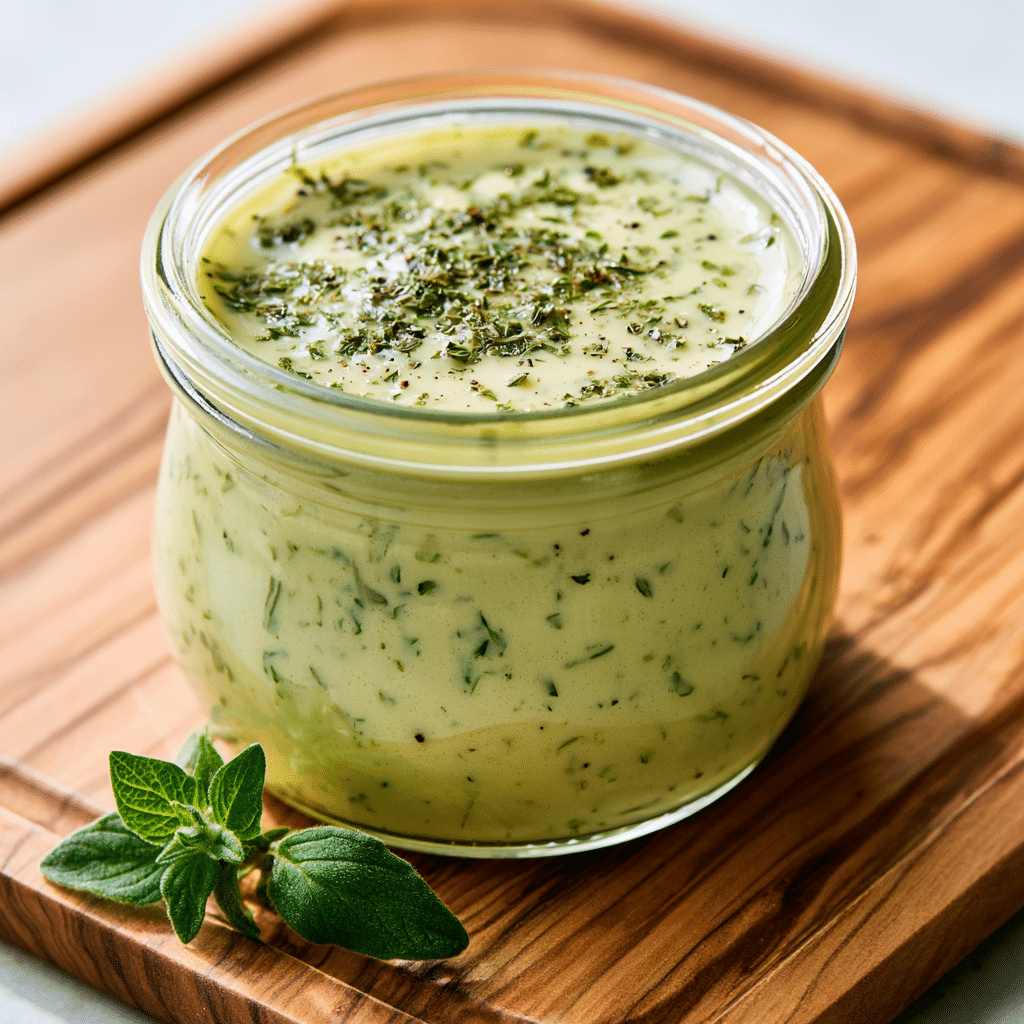
Greek Salad Dressing

Equipment
- Food processor
- Glass jar with airtight lid (16 oz / 500ml)
- Measuring cups and spoons
Ingredients
- 1 cup extra virgin olive oil 240ml
- ½ cup white wine vinegar 120ml
- 4 cloves garlic peeled, about 20g
- 1 teaspoon granulated sugar 4g, or to taste
- 1 tablespoon fresh lemon juice 15ml
- ½ teaspoon Dijon mustard 2.5g
- 1 ½ teaspoons dried oregano
- ½ teaspoon onion powder
- ½ teaspoon dried thyme
- 1 teaspoon fine sea salt or ½ teaspoon table salt
- ¼ teaspoon freshly ground black pepper
Instructions
- Add the white wine vinegar, garlic, sugar, lemon juice, Dijon mustard, dried oregano, onion powder, dried thyme, salt, and black pepper to a food processor. Blend for 15–20 seconds until the garlic is finely minced and the mixture is well combined.½ cup white wine vinegar, 4 cloves garlic, 1 teaspoon granulated sugar, 1 tablespoon fresh lemon juice, ½ teaspoon Dijon mustard, 1 ½ teaspoons dried oregano, ½ teaspoon onion powder, ½ teaspoon dried thyme, 1 teaspoon fine sea salt, ¼ teaspoon freshly ground black pepper
- With the food processor running, pour the olive oil in a thin, steady stream through the feed tube. This should take about 30–45 seconds. The dressing will emulsify into a slightly thick, creamy consistency.1 cup extra virgin olive oil
- Stop the processor and taste the dressing. Adjust salt, sugar, or lemon juice to your preference. Transfer to a clean glass jar with an airtight lid. Store in the refrigerator for up to 3 weeks.
Notes
Nutrition
FAQ
Can I make this dressing without a food processor?
Yes — a blender works the same way, or you can use a jar and shake it vigorously. If you go the jar route, mince the garlic as finely as possible first, since you won’t get the same smooth emulsion without a machine, and the garlic pieces will be more noticeable.
How much dressing does this make and how many salads will it cover?
The recipe yields roughly 1½ cups of dressing, which is enough for about 5 generous servings. A standard side salad needs 2–3 tablespoons; a larger meal-sized salad with grains or protein will use closer to 3–4 tablespoons.
Can I use this dressing as a marinade for chicken or vegetables?
Yes, it works well as a marinade. Use it on chicken, lamb, or sturdy vegetables like zucchini and bell peppers for 30 minutes to 2 hours before grilling — the acid in the vinegar and lemon juice helps tenderize and the oregano holds up well to heat. Don’t reuse marinade that has been in contact with raw meat as a dressing.